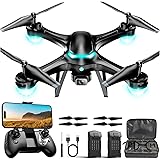
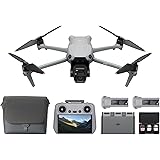
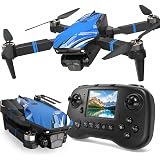
As discussed in the video above, if you’ve ever tried your hand at flying traditional single-rotor RC helicopters, you likely understand the steep learning curve and the frustration that often comes with them. Many hobbyists quickly find themselves with a pile of spare parts rather than a functioning aircraft, a common experience for those new to aerial piloting. Fortunately, the world of unmanned aerial vehicles has evolved dramatically, with multi-rotor drones offering a significantly more accessible and stable flying experience for everyone from beginners to seasoned professionals.
The Steep Ascent: Why Single-Rotor RC Helicopters Are So Challenging
Flying a single-rotor RC helicopter is undeniably difficult, demanding a high level of skill and precision from the pilot. The design inherently makes them unstable, requiring constant, nuanced adjustments to maintain flight. A single main rotor provides lift and directional control, while a tail rotor counters torque and controls yaw.
1. Every input on the controls directly and dramatically affects the helicopter’s attitude and position. This means pilots must anticipate movements and make continuous, small corrections, which can be overwhelming for newcomers. The physics involved are complex, making true mastery a long and arduous journey.
2. Crashes are common due to this inherent instability and the unforgiving nature of the controls. Such incidents often lead to costly repairs, as parts like rotor blades, landing gear, and servos are prone to damage. This financial barrier, coupled with the frustration of repeated failures, often discourages aspiring pilots from continuing the hobby.
Multi-Rotor Drones: A New Era of Accessible Flight
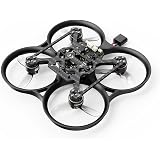
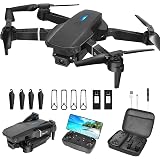
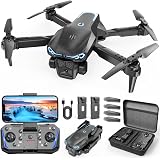
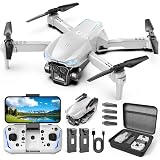
Unlike their single-rotor counterparts, multi-rotor drones utilize multiple propellers (typically four, six, or eight) to achieve lift and control. These individual rotors work in conjunction, allowing for a fundamentally more stable and easier-to-manage flight profile. This design shift has revolutionized aerial navigation, making it approachable for a much wider audience.
1. The distinct advantage of multi-rotor systems lies in their ability to vary the speed of each individual motor. This sophisticated control mechanism allows the drone’s flight controller to adjust thrust precisely at each corner, enabling seamless movement, rotation, and incredibly stable hovering. This level of integrated control is largely what makes flying multi-rotor drones far less demanding than piloting traditional RC helicopters.
Enhanced Stability and Simplified Controls
One of the most significant reasons multi-rotor drones are considered superior for ease of use is their inherent stability. Modern drones, particularly commercial models from manufacturers like DJI, integrate advanced flight stabilization systems that simplify piloting dramatically.
1. When you fly a multi-rotor drone in “stabilized mode,” as mentioned in the video, you aren’t constantly fighting to keep it airborne. Instead, the drone actively assists you, using onboard sensors and sophisticated algorithms to maintain a level position. This means if you release the controls, the drone will simply stop and hover in place, patiently waiting for your next command.
2. This auto-hover capability is a game-changer for beginners. It provides a crucial mental buffer, allowing pilots to think, plan, and react without the panic of an uncontrolled descent or collision. The system essentially handles the delicate balancing act, freeing the pilot to focus on directional control and creative shot composition, rather than just keeping the aircraft in the air.
Redundancy and Robustness
Multi-rotor drones also offer a degree of redundancy that single-rotor helicopters cannot match. While losing a single rotor on a quadcopter is still critical, hexacopters (six rotors) and octocopters (eight rotors) can often continue to fly, or at least perform a controlled descent, even if one motor fails. This enhances safety and protects your investment.
1. The distributed thrust system means that the forces are spread across multiple points, leading to less stress on individual components compared to the concentrated power of a single main rotor. This often translates into greater durability and potentially lower maintenance costs over time.
Beyond Basic Flight: Smart Features Elevating the Drone Experience
Modern multi-rotor drones come equipped with an array of intelligent features that further enhance their accessibility and utility. These technologies move beyond simple flight control, offering automated assistance and expanded capabilities.
1. Integrated GPS systems allow drones to maintain a fixed position with remarkable accuracy, even in windy conditions. This global positioning capability enables features like ‘Return to Home,’ where the drone automatically flies back to its take-off point, and waypoint navigation, allowing for pre-programmed flight paths. These features are invaluable for both beginners learning the ropes and professionals undertaking complex missions.
2. Obstacle avoidance sensors, another common feature, provide an extra layer of safety. These sensors detect nearby objects and can either alert the pilot, automatically brake, or even navigate around obstacles. This significantly reduces the risk of collisions, a major concern when flying, especially for new pilots.
3. Advanced flight modes, such as ‘Follow Me,’ ‘ActiveTrack,’ or ‘Orbital Flight,’ allow the drone to automatically track subjects or execute complex cinematic maneuvers with minimal pilot input. This democratization of professional-grade aerial videography and photography is a direct result of the sophisticated algorithms embedded within today’s multi-rotor drones.
Practical Applications and Expanding Horizons
The ease of flying multi-rotor drones has opened up a vast array of practical applications, far beyond simple recreation. Their stable flight characteristics and intelligent features make them indispensable tools across numerous industries.
1. In aerial photography and videography, drones have become standard equipment. Their ability to hover steadily, capture smooth footage, and access unique perspectives at a fraction of the cost of traditional aerial platforms has transformed media production.
2. For commercial purposes, multi-rotor drones are widely used for inspections of infrastructure like power lines, bridges, and cell towers. They can also survey agricultural fields, monitor construction sites, and even assist in search and rescue operations. Their ability to quickly and safely collect data from hard-to-reach or dangerous areas provides immense value.
3. Enthusiasts now have access to sophisticated technology that was once reserved for military or specialized industrial use. From FPV (First Person View) racing to cinematic filming, multi-rotor drones offer a rich and engaging hobby that is constantly evolving.
The clear distinction between the challenging nature of single-rotor RC helicopters and the user-friendly design of modern multi-rotor drones is undeniable. The advancements in flight stabilization, GPS technology, and smart features have made aerial piloting accessible to virtually anyone. This evolution truly allows more people to experience the joy and utility of flight without the steep barriers of the past, making multi-rotor drones the go-to choice for ease, stability, and versatility.
Beyond the Rotors: Your Superiority Questions
Why are multi-rotor drones recommended for beginner pilots?
Multi-rotor drones are easier to fly because they use multiple propellers and advanced stabilization systems to achieve stable hovering and simplified controls, unlike traditional single-rotor RC helicopters.
How do multi-rotor drones achieve such stable flight?
They achieve stable flight by varying the speed of each individual motor and propeller, allowing the drone’s flight controller to precisely adjust thrust for smooth movement and hovering.
What is ‘auto-hover’ and how does it help new drone pilots?
Auto-hover is a feature where the drone automatically maintains a level position and stays in place if you release the controls. This helps new pilots focus on steering without worrying about keeping the drone airborne.
Do modern multi-rotor drones have features that enhance safety?
Yes, many include features like integrated GPS for ‘Return to Home’ and obstacle avoidance sensors, which help detect objects and prevent collisions, making flying safer for beginners.