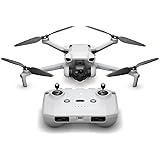
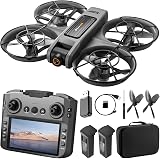
The visual spectacle of a custom-built drone, like the 10-inch tricopter showcased in the video above, highlights the immense potential of bespoke aerial platforms. Constructing a custom drone moves beyond off-the-shelf limitations. It unlocks unparalleled performance, specific functionality, and a deeply personalized flying experience. For those ready to delve into the intricacies of DIY drone engineering, understanding the core principles and component selection is paramount.
Custom-built 10-inch tricopters present distinct design challenges and advantages. Unlike quadcopters, tricopters utilize a unique Y3 configuration. This setup demands precise synchronization between three motors. Moreover, a dedicated servo mechanism manages yaw control, adding a layer of mechanical complexity. The reward is often a more agile platform with a distinct flight signature, often preferred for specific cinematic or FPV applications. However, achieving this performance requires meticulous planning and expert execution during the build phase.
Engineering the 10-inch Tricopter Frame
The frame is the skeleton of any custom drone. For a 10-inch tricopter, carbon fiber remains the material of choice. Its high strength-to-weight ratio is crucial for extended flight times and resilience. Consider plate thicknesses typically ranging from 2mm to 4mm for the main body and arms. Frame geometry directly impacts flight dynamics. A symmetrical layout helps simplify PID tuning. Conversely, an asymmetrical design might offer unique payload mounting options. Ensure sufficient space exists for all components, especially the larger 10-inch propellers, without prop wash interference. Reinforcement points are critical, particularly around motor mounts and the yaw mechanism.
Propulsion System: Motors, ESCs, and Propellers
Selecting the right propulsion system is paramount for a 10-inch tricopter. Brushless motors around 900-1100KV typically suit 10-inch propellers on 4S LiPo batteries. Higher KV motors might be chosen for 3S systems, targeting more aggressive flight. Each motor needs a corresponding Electronic Speed Controller (ESC). Opt for ESCs rated for at least 30A for 10-inch props, supporting DShot protocols for precision. This allows for rapid communication with the flight controller. Proper ESC calibration is non-negotiable for smooth motor operation. Furthermore, dynamic propeller balancing prevents vibrations, protecting sensitive electronics. Blades made from glass-fiber nylon or carbon-reinforced plastics offer excellent efficiency and durability. Pitch selection, often 4.5-5.0 inches, significantly affects thrust characteristics.
Flight Controller Integration and Configuration
The flight controller (FC) is the brain of your custom tricopter. Popular choices include boards running Betaflight, INAV, or ArduPilot firmware. These platforms offer robust features and extensive customization options. Selecting an FC with a powerful F7 or H7 processor ensures ample processing overhead. Ensure the FC has enough UARTS for peripherals like GPS, telemetry, and FPV systems. Initial setup involves flashing the appropriate firmware and configuring basic parameters. However, tricopters require specific yaw servo configuration within the FC software. This ensures the servo accurately responds to yaw commands, a critical aspect of tricopter stability. Precise PID tuning, adapted for the Y3 configuration, dramatically enhances flight performance.
Power Management and Battery Selection
Effective power management is key for any custom drone. A high-quality Power Distribution Board (PDB) or an FC with integrated PDB capabilities is essential. This distributes clean power to all components. For a 10-inch tricopter, a 4S (14.8V) or 6S (22.2V) LiPo battery is standard. Capacity typically ranges from 2200mAh to 4000mAh, balancing flight time and weight. The battery’s C-rating indicates its discharge capability. Always select a C-rating high enough to meet the motor’s peak current demands. Insufficient C-rating can lead to voltage sag and reduced performance. Conversely, an excessively high C-rating adds unnecessary weight. Connecting a low-voltage alarm or integrating battery telemetry with the flight controller provides vital flight data.
Assembly, Wiring, and Pre-Flight Checks
The physical assembly of your custom built 10-inch tricopter demands precision. Route all wiring cleanly, using zip ties and heat shrink tubing for protection. This minimizes potential interference and simplifies troubleshooting. Solder all connections securely; cold solder joints are a common point of failure. The yaw servo mounting must be robust, with no play or slop. Ensure the servo arm is correctly aligned and calibrated for its full range of motion. Before the maiden flight, perform comprehensive pre-flight checks. Verify propeller rotation direction and motor order in the FC software. Confirm all control inputs respond correctly to stick movements. Conduct range checks for your radio control link. Furthermore, perform a comprehensive visual inspection for loose screws or incorrectly seated components. These steps minimize risks associated with custom builds.
Custom Craftsmanship: Your 10-inch Tricopter & Drone Q&A
What is a tricopter?
A tricopter is a type of drone that uses three motors in a unique Y3 configuration. This design allows for agile flight and has a distinct flight signature.
Why would someone build their own drone instead of buying one?
Building a custom drone allows for unparalleled performance, specific functionality, and a deeply personalized flying experience that off-the-shelf models might not offer.
What material is commonly used for a custom drone’s frame?
Carbon fiber is the material of choice for a custom drone’s frame due to its high strength-to-weight ratio, which helps with flight times and overall resilience.
What is the ‘brain’ of a custom drone?
The flight controller (FC) acts as the brain of your custom drone, running specialized firmware and managing all the controls, stability, and communication with other components.
What type of battery is typically used for a custom tricopter?
Custom tricopters commonly use 4S or 6S LiPo batteries, with capacities generally ranging from 2200mAh to 4000mAh, to power the motors and electronics.