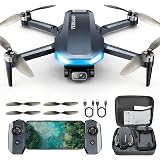
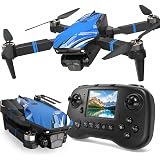
The fascinating world of drones, or Unmanned Aerial Vehicles (UAVs), has rapidly evolved from niche military applications to widespread commercial and recreational use. This evolution is fundamentally driven by advancements in technology and significant cost reductions in components like motors, making sophisticated aerial capabilities accessible to a broader audience. As highlighted in the accompanying video, understanding the core principles of drone operation is paramount for anyone venturing into drone programming, a skill gaining substantial traction in various industries such as aerial photography, filmmaking, surveillance, and even delivery systems.
This introductory guide delves deeper into the foundational aspects of drones, exploring their classification, essential components, and the intricate physics governing their flight. By dissecting these elements, we aim to provide a robust knowledge base, preparing enthusiasts and aspiring programmers to confidently engage with drone technology. Furthermore, we will examine specific platforms, such as the Tello drone, that serve as excellent starting points for hands-on programming endeavors, illustrating how theoretical knowledge translates into practical application.
Understanding Drone Fundamentals: A Deep Dive into How Drones Fly
What Defines a Drone? Beyond the Buzz
While the term “drone” literally refers to a continuous low humming sound, its popular usage has firmly attached it to sophisticated unmanned aerial vehicles. Historically, UAVs were primarily associated with military operations, offering capabilities for reconnaissance and combat without risking human pilots. However, the last decade has witnessed a significant shift, with drones becoming integral tools across numerous civilian sectors. For instance, the real estate industry leverages drones for stunning aerial property tours, while agriculture benefits from their ability to monitor crop health and identify irrigation issues with unparalleled efficiency.
The miniaturization of powerful sensors, the development of robust flight control algorithms, and the decreasing cost of manufacturing have collectively fueled this commercial expansion. Moreover, the increasing demand for data collection from unique perspectives has pushed innovation, making drones indispensable in fields ranging from environmental monitoring to infrastructure inspection. Consequently, the ability to program these versatile machines to perform specific tasks is becoming an invaluable skill, bridging the gap between hardware capabilities and intelligent autonomous operations.
Diverse Drone Configurations: From Quadcopters to Octocopters
Drones are far from a monolithic category; they come in an astonishing array of shapes, sizes, and propeller configurations, each designed for specific purposes and performance characteristics. The most commonly recognized type, often synonymous with the term “drone,” is the quadcopter, distinguished by its four propellers or motors. This configuration strikes an excellent balance between stability, maneuverability, and cost-effectiveness, making it ideal for recreational use, photography, and many commercial applications requiring agile flight.
As flight requirements become more demanding, other multirotor designs emerge. Hexacopters, featuring six propellers, offer enhanced stability and greater payload capacity compared to quadcopters, often chosen for professional cinematic work where camera equipment can be substantial. Similarly, octocopters, equipped with eight propellers, represent the pinnacle of multirotor design in terms of lift capability and redundancy. This increased number of motors provides a critical safety net; should one or even two motors fail, the octocopter can often maintain controlled flight, a vital feature for missions involving expensive payloads or operations over sensitive areas. Each configuration dictates varying levels of power distribution complexity and flight controller programming requirements.
Essential Components of Modern Drones
Understanding how drones fly necessitates an appreciation for the symbiotic relationship between their various components. Each part plays a crucial role, working in concert to achieve stable, controlled, and intelligent flight. From the structural integrity of the frame to the sophisticated algorithms within the flight controller, every element is meticulously engineered to contribute to the drone’s overall performance. Let us examine these critical components in detail, highlighting their function and significance.
The Foundation: Drone Frames
The drone frame, essentially the body or chassis, serves as the structural backbone that meticulously holds every other component in place, ensuring their correct alignment and protection. Its design critically influences the drone’s weight, durability, and aerodynamic efficiency. In high-performance and commercial drones, carbon fiber is overwhelmingly the material of choice for frames due to its exceptional strength-to-weight ratio. This material’s lightweight nature is crucial for maximizing flight time, while its inherent rigidity provides superior protection for sensitive electronics during impacts.
Conversely, for DIY enthusiasts and educational projects, materials such as wood and 3D-printed plastics have gained popularity. While these alternatives may not offer the same performance or durability as carbon fiber, they provide accessible and cost-effective options for prototyping and learning. The choice of frame material directly impacts the drone’s overall resilience, its ability to carry heavier payloads, and ultimately, its suitability for different operational environments, from indoor learning to outdoor aerial surveys.
Powering Flight: Motors and Propellers
The motors are the true engines of a drone, generating the rotational force necessary for flight, while the propellers translate this rotation into aerodynamic lift. There are two primary types of motors found in drones: brushed and brushless. Brushed motors are simpler in construction and generally more affordable, often found in smaller, entry-level drones. However, they are less efficient, have a shorter lifespan due to brush wear, and offer a lower power-to-weight ratio, limiting their application in more demanding scenarios.
Brushless motors, on the other hand, are the standard for most modern performance drones. Despite their higher cost, they boast superior efficiency, significantly longer lifespans, and a much better power-to-weight ratio, allowing for greater thrust and extended flight times. Propellers, which come in various sizes and blade counts, are specifically designed to generate lift. Crucially, drones utilize two types of propellers: those rotating clockwise and those rotating counter-clockwise. This opposing rotation is essential to cancel out angular momentum, preventing the entire drone from uncontrollably spinning in one direction and enabling stable hovering.
Intelligent Control: ESCs, PDBs, and Flight Controllers
The brain and nervous system of a drone comprise a sophisticated suite of electronic components that manage power distribution and orchestrate flight. The Electronic Speed Controller (ESC) is responsible for regulating the speed of each motor. It converts the direct current (DC) supplied by the battery into the alternating current (AC) required by brushless motors, precisely controlling their RPM based on signals from the flight controller. ESCs can be individual units for each motor or integrated onto a single board for a more compact design.
Power Distribution Boards (PDBs) act as the central electrical hub, distributing power from the main battery to all drone components, including motors, ESCs, the flight controller, and any auxiliary systems like cameras or video transmitters. At the core of all drone operations is the flight controller, which functions as the drone’s central processing unit. It processes data from various sensors, interprets commands from the receiver, and then sends precise instructions to the ESCs to adjust motor speeds. This intricate ballet of data processing and execution allows the drone to maintain stability, execute complex maneuvers, and respond dynamically to environmental changes.
Furthermore, the battery itself is a critical component, typically a lightweight and energy-dense Lithium Polymer (LiPo) unit. Its capacity and discharge rate directly influence the drone’s flight time and overall power delivery. Modern LiPo batteries are engineered to offer high power output for their size, a crucial factor in achieving optimal performance and endurance for aerial vehicles. The continuous advancement in battery technology remains a key driver for extending drone capabilities and operational duration.
Sensing the Environment: Navigational and Positional Sensors
For a drone to fly autonomously or even maintain stable flight, it must accurately perceive its environment and its own orientation in space. This perception is facilitated by an array of sophisticated sensors that feed critical data to the flight controller. A pressure sensor, or barometer, is commonly integrated to measure atmospheric pressure, which in turn allows the drone to estimate its altitude above ground level, enabling precise altitude hold capabilities.
Global Positioning System (GPS) modules are indispensable for outdoor flight, providing accurate positional data that allows the drone to know its exact coordinates and navigate pre-programmed waypoints. Furthermore, an Inertial Measurement Unit (IMU), typically comprising an accelerometer, gyroscope, and often a magnetometer, continuously measures the drone’s acceleration, angular velocity, and heading. This data is critical for determining the drone’s pitch, roll, and yaw angles, allowing the flight controller to make rapid adjustments to maintain stability. Advanced drones may also incorporate ultrasonic sensors for precise low-altitude hovering and optical flow sensors for maintaining position indoors where GPS signals are unavailable, showcasing the multi-layered approach to environmental awareness.
Mastering Flight Mechanics: How Drones Achieve Stability and Movement
The apparent complexity of a multi-rotor drone’s movement, with its four or more independent motors, actually simplifies to a few intuitive principles once the underlying physics are understood. Drones operate with four degrees of freedom, enabling translation in three directions (up/down, forward/backward, left/right) and rotation around one axis (yaw). The fundamental principle relies on varying the thrust generated by individual propellers to create differential forces, allowing for precise control over the drone’s position and orientation in space.
As previously discussed, a quadcopter achieves initial stability through a balanced distribution of clockwise and counter-clockwise rotating propellers. This arrangement ensures a net zero angular momentum, effectively preventing the drone from spinning uncontrollably and allowing it to remain stationary. However, achieving dynamic movement requires a more nuanced application of motor power, where the flight controller continuously calculates and adjusts thrust levels based on user input and sensor data, translating commands into fluid aerial maneuvers.
Translational Movement: Ascending, Descending, and Horizontal Flight
The most straightforward translational movement is vertical flight. To ascend, the drone’s flight controller commands all motors to increase their speed simultaneously, generating a total lift force greater than the drone’s weight. Conversely, for descent, the motor speeds are uniformly decreased, causing the lift to become less than the drone’s weight, allowing it to move downwards. Maintaining a stable hover requires a precise balance where the collective lift exactly equals the drone’s weight, necessitating constant minor adjustments by the flight controller to counteract atmospheric disturbances and maintain a fixed altitude.
Horizontal translation, such as moving left or right, involves a differential adjustment of motor speeds across the drone’s body. To move left, the motors on the left side slightly reduce their speed, while the motors on the right side increase theirs. This creates a tilt, causing the drone to drift in the desired direction. Similarly, moving forward is achieved by reducing the speed of the front motors and increasing the speed of the rear motors, tilting the drone forward. Backward movement is accomplished by reversing this differential thrust, demonstrating the intuitive nature of thrust manipulation for comprehensive spatial positioning.
Rotational Control: Precision Turns and Yaw Management
Achieving rotational movement, specifically yaw (rotation around the vertical axis), utilizes the inherent angular momentum generated by the counter-rotating propellers. Since two propellers spin clockwise and two spin counter-clockwise, their individual torques cancel each other out during stable flight. However, to induce a yaw movement, the balance of these torques is intentionally disrupted.
To rotate the drone clockwise, the flight controller slightly decreases the speed of the clockwise-spinning motors while simultaneously increasing the speed of the counter-clockwise spinning motors. This imbalance creates a net torque in the clockwise direction, causing the drone to rotate. Conversely, to achieve a counter-clockwise rotation, the speeds of the counter-clockwise motors are reduced, and the speeds of the clockwise motors are increased. This precise manipulation of individual motor thrust and torque allows for highly controlled and agile rotational maneuvers, crucial for orientation in aerial photography, surveillance, and dynamic flight patterns.
The Tello Drone: An Ideal Platform for Programming and Learning
For individuals embarking on the journey of drone programming, selecting the right hardware is a pivotal first step. The Tello drone, a compact and intelligent device produced by Ryze Technology with contributions from DJI and Intel, stands out as an exceptionally user-friendly and robust platform for educational purposes. As an entry-level drone, it beautifully balances affordability with advanced capabilities, making it a prime choice for learning the fundamentals of drone operation and coding, as highlighted by its frequent recommendation in courses focusing on drone programming with Python.
One of Tello’s most compelling features is its programmability via an SDK (Software Development Kit). This SDK allows users to control the drone’s movements, access its camera feed, and even implement computer vision techniques through simple Wi-Fi commands, eliminating the need for complex external wiring or additional hardware. This streamlined approach significantly lowers the barrier to entry for aspiring drone programmers, enabling immediate hands-on experience in a safe and controlled environment, often indoors thanks to its multiple safety features like propeller guards.
Key Specifications and Features of the Tello Drone
The Tello drone, despite its compact size, boasts a surprising array of technical specifications that contribute to its effectiveness as a learning tool. It is equipped with a camera capable of capturing 720p video at a smooth 30 frames per second, allowing for practical application of image processing and computer vision algorithms. Furthermore, its integrated dual antennas ensure stable video transmission over Wi-Fi, which is crucial for real-time control and data streaming during programming exercises.
In terms of performance, the Tello offers a maximum flight time of approximately 13 minutes on a single charge and a flight distance of about 100 meters, reaching a top speed of 8 meters per second. These specifications provide ample opportunity for executing various flight patterns and programming sequences without constant recharging. The drone’s reliance on DJI’s flight control technology and Intel’s vision processing unit underscores its robust internal architecture, ensuring reliable performance that allows learners to focus on the programming aspect rather than wrestling with flight stability issues.
Maximizing Your Learning: Tello Pack Options for Programmers
When acquiring a Tello drone, consumers typically encounter two main package options: the regular pack and the jumbo pack, each offering distinct advantages, particularly for programming-focused users. The standard regular pack usually includes the drone itself, a single battery, a set of extra propellers, and propeller guards for added safety. Charging in this configuration is straightforward, typically involving a direct USB connection to the drone, making it convenient for casual use and initial exploration.
For serious drone programmers and educators, the Tello jumbo pack represents a significantly better value proposition. This pack augments the regular offerings with two additional batteries and a three-slot battery charging hub. The availability of multiple batteries is a game-changer for programming development; it minimizes downtime, allowing for continuous testing and iteration of code. While one battery is in use, the others can be simultaneously charged, ensuring a seamless workflow and maximizing the amount of practical programming time. Additionally, Ryze offers both a regular Tello and an EDU version, with the EDU variant often incorporating additional educational features or pre-loaded programming capabilities, though both are fully compatible with common programming courses.
Decoding Drone Flight: Your Questions Answered
What is a drone?
A drone, or Unmanned Aerial Vehicle (UAV), is an aircraft that flies without a human pilot. They are used for many purposes, from photography to surveillance and delivery.
How do drones stay in the air?
Drones fly by using multiple motors and propellers that spin to create lift. The drone’s flight controller adjusts the speed of these motors to control its movement and stability.
What are the main parts of a drone?
Key components include the frame (the body), motors and propellers for propulsion, a battery for power, and a flight controller which acts as the drone’s central brain.
What is a quadcopter?
A quadcopter is the most common type of drone, distinguished by having four propellers or motors. This design offers a good balance of stability, maneuverability, and cost-effectiveness.