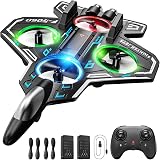
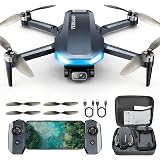
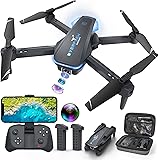
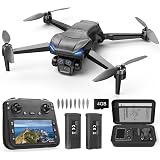
Navigating the diverse landscape of unmanned aerial vehicles (UAVs) can often present a challenge, especially when attempting to determine the ideal tool for a specific task. While many individuals instinctively visualize the familiar multi-rotor design when the term ‘drone’ is mentioned, a broader understanding of available technologies is crucial for optimal mission planning. The accompanying video offers a concise overview of two prominent drone categories: the versatile quadcopter and the efficient fixed-wing drone.
This article aims to significantly expand upon the foundational insights provided, offering a more detailed comparison of these two drone types. Key differences are often considered in terms of their operational capabilities, ideal applications, and the strategic advantages each offers. By exploring these distinctions further, a clearer path towards selecting the most appropriate drone for your next mission can be established, ensuring that specific requirements are met with precision and efficiency.
Choosing Between Quadcopter and Fixed-Wing UAVs
The decision to deploy either a quadcopter or a fixed-wing drone is rarely about one being inherently ‘better’ than the other. Instead, it is understood that each type possesses unique characteristics that make it exceptionally suited for particular operational scenarios. Careful consideration of mission objectives, environmental factors, and desired data outputs is essential for making an informed selection.
Understanding the fundamental design principles of both categories helps clarify their respective strengths. Quadcopters, which are part of the multi-rotor family, rely on multiple propellers for vertical lift and propulsion, enabling precise hovering and agile maneuverability. Fixed-wing drones, conversely, operate more like traditional aircraft, generating lift through their wings’ aerodynamic design and requiring forward momentum to stay airborne. These differing principles directly translate into distinct operational profiles.
Key Differences: Quadcopter Drones
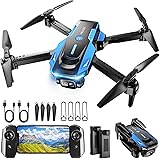
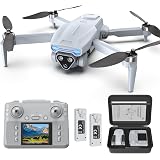
Quadcopter drones are recognized for their remarkable versatility and ease of use in a variety of situations. Their design allows for several advantages that make them a popular choice for many users, from beginners to seasoned professionals.
- Portability and Deployment: These drones are typically compact, lightweight, and designed to be easily packed and transported. Deployment is often a swift process, requiring minimal setup time. This rapid readiness is invaluable for urgent tasks or operations in dynamic environments.
- Versatility and Maneuverability: A significant advantage of quadcopters is their ability to take off and land vertically (VTOL), allowing operations in confined spaces where runways are not feasible. They can hover precisely over a target, navigate complex obstacles, and execute intricate flight paths. This makes them ideal for detailed inspections of structures, close-up cinematography, and vertical asset management.
- Gimbal Systems: Most quadcopters are equipped with advanced gimbal systems. A gimbal is a pivoted support that allows rotation of an object about a single axis. In drones, it typically stabilizes cameras, enabling the user to capture stable footage and imagery regardless of the drone’s movement. This allows for clear views of targets or areas from various angles, facilitating high-quality data collection for mapping, surveillance, or cinematic projects.
- Ease of Piloting: Modern quadcopters often feature sophisticated flight controllers, GPS navigation, and automated flight modes, making them relatively easier to pilot compared to fixed-wing counterparts. Beginners can quickly learn to operate them for basic tasks, lowering the barrier to entry for drone technology.
Advantages of Fixed-Wing Drones
Fixed-wing drones, while requiring a slightly different operational approach, excel in missions demanding endurance, speed, and extensive area coverage. Their aerodynamic design and operational characteristics provide distinct benefits that are not easily matched by multi-rotor systems.
- Enhanced Stability and Endurance: Once airborne, fixed-wing drones demonstrate exceptional stability, particularly in windy conditions. This inherent stability contributes to smoother data capture over long distances. Moreover, a key advantage highlighted in the video is their significantly longer flight time, which can be around 90 minutes or even more depending on the model and payload. This extended endurance is crucial for large-scale projects.
- Extensive Area Coverage: Due to their speed and prolonged flight capabilities, fixed-wing drones can cover vast geographical areas in a single mission. This makes them indispensable for large-scale aerial mapping, precision agriculture over sprawling fields, long-range corridor inspections (e.g., pipelines, power lines), and environmental monitoring of expansive territories. Efficiency is greatly increased as more data can be gathered in less time compared to a quadcopter.
- Payload Flexibility: The robust design of many fixed-wing platforms allows for greater flexibility in payload integration. As mentioned, specialized cameras such as 3D cameras for intricate modeling, thermal cameras for heat signature detection, or even dual camera setups for stereoscopic imaging can be accommodated. This adaptability also extends to other sensor types, including multispectral sensors for crop health analysis, LiDAR for highly accurate terrain mapping, or specialized surveillance equipment.
- Discreet Operation: A notable characteristic of fixed-wing drones is their operational stealth. When flying at higher altitudes, these drones are often reported to be virtually silent and difficult to spot from the ground. This feature is particularly beneficial for sensitive missions such as wildlife monitoring, security surveillance, or reconnaissance where discretion is paramount.
Selecting the Right Drone for Your Mission
The core principle guiding drone selection, as underscored in the video, is aligning the drone’s specific capabilities with the requirements of the mission. No single drone type is universally superior; rather, their utility is defined by the context of their application. Here, a more detailed examination of critical factors can assist in the decision-making process.
Mission-Specific Considerations
- Area Size and Topography: For missions involving vast, open areas such as agricultural fields, large construction sites, or environmental surveys, the long endurance and high-speed coverage of fixed-wing drones are invaluable. Their efficiency in covering kilometers in a single flight cycle far surpasses that of quadcopters. Conversely, for smaller, complex sites, urban environments, or areas with significant obstacles (e.g., cell towers, bridges, building facades), the precise hovering and vertical takeoff/landing (VTOL) capabilities of a quadcopter are essential.
- Required Data Output: The type of data to be collected profoundly influences the choice. If highly detailed, close-up imagery, vertical inspections, or stable cinematic shots are needed, a quadcopter with its advanced gimbal system is typically preferred. For creating large-scale 2D orthomosaics, 3D point clouds of extensive areas, or multispectral analysis for vegetation health, the consistent flight paths and broad coverage of a fixed-wing drone offer superior results. Thermal inspections over wide areas, such as detecting heat loss in large building complexes or monitoring wildlife, are also more efficiently conducted with fixed-wing platforms.
- Deployment Environment: Consider the operational environment. If missions require rapid deployment from a vehicle, quick setup in the field, or flight from confined spaces (like a small clearing in a forest), a quadcopter’s ease of use is a significant advantage. Fixed-wing drones often require more space for launch and recovery (e.g., hand-launch, catapult-launch, or belly-landing on a clear surface), which might not always be available. Weather conditions also play a role; while both types can operate in moderate winds, the inherent stability of a fixed-wing drone can sometimes offer better performance in breezy conditions over open terrain for sustained periods.
- Operational Complexity and Pilot Skill: While modern drones are increasingly automated, a degree of pilot skill is always beneficial. Quadcopters, with their intuitive controls and GPS-assisted hovering, generally have a shallower learning curve. Fixed-wing drones, especially those requiring hand-launch or specific landing procedures, may demand more training and operational experience. Mission planning for fixed-wing drones often involves more extensive route optimization to maximize coverage per flight.
Debriefing Your Drone Decision: Q&A
What are the two main types of drones discussed in the article?
The article primarily discusses two main types of drones: quadcopters, which are part of the multi-rotor family, and fixed-wing drones, which fly more like traditional airplanes.
What is a quadcopter drone known for?
Quadcopter drones are known for their ability to hover precisely, maneuver in small spaces, and are generally easier to pilot, making them great for detailed inspections and close-up tasks.
What is a fixed-wing drone known for?
Fixed-wing drones are known for their significantly longer flight times, speed, and ability to efficiently cover vast geographical areas, which is ideal for large-scale mapping or monitoring.
How do I decide which drone type is right for my mission?
The best drone depends on your specific mission: choose a quadcopter for detailed work in confined spaces, and a fixed-wing drone for covering large areas quickly and for extended periods.