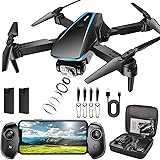
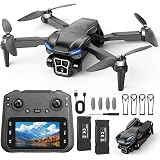
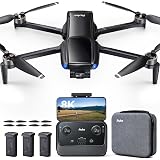
Understanding the intricate workings of modern drone systems is not just a technical curiosity; it’s a fundamental requirement for safe and compliant operation. For instance, regulatory bodies like Transport Canada emphasize that drone pilots must possess a comprehensive understanding of Remotely Piloted Aircraft Systems (RPAS) to mitigate risks and effectively troubleshoot in-flight anomalies. This deep knowledge helps prevent problems and provides crucial insight into resolving issues should they arise, ensuring both pilot and public safety. The following guide delves into the core components and functionalities that constitute these sophisticated aerial machines, expanding upon the foundational insights presented in the video above.
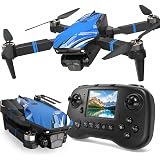
Every complex system benefits from clear terminology, and RPAS are no exception in the rapidly evolving world of unmanned aviation. Initially, your drone is officially termed a Remotely Piloted Aircraft (RPA), often prefixed with a lowercase ‘s’ to denote a small RPA. The device controlling this aircraft is known as the Ground Control Station (GCS), which communicates seamlessly with the RPA through a Command and Control (C2) radio link. Collectively, this entire sophisticated setup, encompassing the drone, its controller, and their communication, is officially recognized as a Remotely Piloted Aircraft System (RPAS), highlighting its integrated nature.
The Ground Control Station (GCS): Your Command Center
The Ground Control Station (GCS) typically comprises several essential elements working in concert to provide the pilot with full control and situational awareness. This setup often includes a smartphone running specialized flight software, a dedicated control unit equipped with joysticks and various physical controls, and integrated antennae for robust communication with the drone. The integrity of the GCS relies heavily on software compatibility across all its components; therefore, ensuring that the phone, the control unit, the drone, and even associated battery systems are running synchronized software versions is critically important. Manufacturers frequently release updates to enhance features, improve safety, and patch vulnerabilities, making timely and comprehensive updates a vital part of drone ownership.
Furthermore, flying with incompatible software versions can lead to unpredictable behavior, ranging from minor glitches to catastrophic failures, thereby jeopardizing flight safety. It is a best practice to only accept software updates directly from your drone’s original manufacturer to prevent the introduction of malicious software or instability. This proactive approach helps maintain the operational integrity of your RPAS and ensures that all systems are optimized for reliable performance. Regularly checking for and installing these updates across all relevant components is an indispensable aspect of responsible drone piloting.
The Critical Command and Control (C2) Radio Link
The C2 radio link serves as the indispensable umbilical cord connecting the GCS to the drone, facilitating the transmission of pilot commands and the reception of vital telemetry data. This link might utilize standard Wi-Fi protocols or employ more advanced, proprietary technologies such as DJI’s OcuSync, known for its superior range and interference resilience. Regardless of the underlying technology, maintaining a clear radio line of sight (RLOS) is paramount for ensuring an uninterrupted and stable connection, preventing potential signal degradation. The concept of RLOS is largely similar to visual line of sight but introduces a unique variable called the Fresnel Zone, which describes an elliptical area around the radio signal path where obstacles can significantly impact signal strength through diffraction.
Radio signals inherently diminish in strength over distance and are susceptible to various forms of interference from environmental factors and other electromagnetic sources. Obstacles like buildings, dense vegetation, hills, or bodies of water can directly impede the signal, while nearby radio sources such as Wi-Fi networks, cellular towers, and electromagnetic noise from power lines can introduce significant disruption. Advanced systems like OcuSync actively monitor radio signal quality, dynamically switching channels to optimize the connection and maintain robust control, showcasing the technological sophistication embedded in modern drone systems. Should the C2 link be lost, a common occurrence for even experienced pilots, several immediate actions can be taken to re-establish contact with the drone, including re-orienting antennae and moving to an unobstructed location.
Automated Return To Home (RTH) Functionality
Many contemporary drone systems are equipped with an autonomous Return To Home (RTH) mode, a crucial safety feature designed to automatically guide the drone back to its launch point if the C2 link is lost for a pre-defined duration. Pilots must ensure this vital feature is enabled during pre-flight checks, as software updates or settings resets can inadvertently disable it. Configuring an appropriate RTH altitude is equally important; this setting should be high enough to clear any potential obstacles such as trees, buildings, or terrain variations along the return path. A carefully chosen RTH altitude is critical to prevent collisions during an automated return.
Moreover, the RTH function’s effectiveness can vary based on the specific flight scenario, particularly if the pilot’s launch location is dynamic. For instance, if a drone is launched from a moving boat, an automated RTH could direct the drone back to its original launch coordinates, potentially resulting in an unintended water landing. In such dynamic situations, pilots must carefully consider alternative lost-link actions or adjust RTH settings accordingly to ensure the drone’s safe recovery. Understanding the nuances of RTH, including its potential limitations in certain environments, is essential for proficient drone operation and risk mitigation.
Drone Transceiver, Flight Controller, and Position Sensors
Onboard the drone itself, a corresponding transceiver and antenna subsystem diligently receives commands from the GCS and transmits crucial data back to the pilot. This outgoing data stream includes the drone’s precise position, a live camera feed, and vital telemetry information such as remaining battery life, all essential for real-time situational awareness. The transceiver is intrinsically linked to the flight controller, which functions as the sophisticated “brain” of the drone, processing myriad inputs to execute flight commands. This central unit orchestrates the signals sent to the motors, translating pilot inputs into precise movements while continuously compensating for environmental variables like wind gusts.
Beyond basic flight control, the flight controller manages obstacle avoidance by interpreting data from various onboard sensors, preventing potential collisions with objects in the flight path. It also meticulously monitors battery conditions, providing the pilot with critical information regarding estimated flight time remaining, enabling informed decisions about mission duration. Furthermore, the flight controller is responsible for managing camera and gimbal positioning, ensuring stable and clear imagery for the pilot’s real-time feed. The precision with which a drone can execute pilot commands hinges significantly on the accuracy of its self-localization, necessitating precise data on its spatial orientation and velocity.
GPS and Global Navigation Satellite Systems (GNSS)
The Global Positioning System (GPS) is one of several Global Navigation Satellite Systems (GNSS) crucial for determining a drone’s precise latitude and longitude by analyzing signal timings from orbiting satellites. Other prominent GNSS include GLONASS, operated by Russia, and Galileo, developed by the European Union, each contributing to improved positional accuracy and redundancy. Generally, the more unobstructed sky a drone can “see,” the more satellites it can lock onto, leading to enhanced positional accuracy and reliability during flight missions. However, environmental factors significantly impact GNSS performance.
In densely urban environments characterized by numerous tall buildings, or within deep mountain valleys, the drone’s view of the sky can be obstructed, reducing the number of available satellites and potentially degrading positioning accuracy. Strong geomagnetic storms also pose a challenge, as they can distort satellite time signals, leading to further inaccuracies in the drone’s reported position. Advanced drone systems often incorporate Real-Time Kinematic (RTK) or Post-Processed Kinematic (PPK) technology, which use ground-based reference stations to correct satellite data, achieving centimeter-level precision crucial for professional mapping and surveying applications.
Compass (Magnetometer) and Magnetic Declination
Another indispensable sensor onboard modern drones is the magnetometer, commonly known as the compass, which electronically detects the Earth’s magnetic field to determine the direction to magnetic North. It is important to note that magnetic North is distinct from true North, and the angular difference between these two directions is called magnetic declination. This declination varies geographically, making compass calibration a regular necessity for drone pilots operating in different locations. For example, Toronto experiences a magnetic declination of approximately -10 degrees, while Montreal, located only 500 kilometers away, exhibits a declination of around -14 degrees, illustrating the regional variability.
This geographic variation in magnetic declination is precisely why drone systems frequently prompt pilots to recalibrate their compasses when operating in a new area. Such recalibrations, often humorously referred to as the “DJI dance” by pilots, ensure that the drone’s directional readings remain accurate. Furthermore, the accuracy of the compass can be significantly impacted by local magnetic interference, including proximity to power lines, large metallic structures like car frames, or even certain types of geological formations. Pilots must be mindful of these potential sources of interference to ensure reliable navigation and prevent directional anomalies during flight.
Altimeter and Inertial Measurement Unit (IMU)
The drone’s altimeter is a crucial sensor that measures barometric air pressure to determine the aircraft’s height relative to its launch site. By detecting differences in air pressure between its current location and the take-off point, the altimeter provides a precise vertical position, complementing the horizontal data from GNSS. This sensor is fundamental for maintaining a stable altitude, especially when GNSS signals might be less accurate, such as indoors or under dense canopy. The fusion of data from the GPS, compass, and altimeter collectively provides the drone with a fairly precise determination of its location in three-dimensional space and its orientation relative to the Earth. However, achieving the characteristic rock-steady hovering that modern drones are known for relies on one more critical device: the Inertial Measurement Unit (IMU).
Ultimately, the IMU is primarily responsible for feeding the flight controller intricate details about the drone’s dynamic movement in three-dimensional space, including its precise velocity and direction of travel. This incredible task is accomplished through a sophisticated array of microscopic accelerometers and gyroscopes, which detect minute changes in linear acceleration and angular rotation across all axes. These sensors continuously monitor alterations in location, altitude, yaw (rotation about the vertical axis), pitch (nose up/down), and roll (wing tilt). The IMU transmits this voluminous data stream to the flight controller hundreds of times per second, enabling rapid adjustments for stable flight. Because the IMU relies on these highly sensitive sensors, even slight inaccuracies can lead to measurement drift and disorientation, making periodic calibration essential for sustained performance.
Electronic Speed Controllers (ESCs) and Motors
Based on the comprehensive information gathered from the IMU, GPS, compass, and altimeter, the flight controller precisely determines the required thrust and direction from each propeller. It then transmits appropriate instructions to the Electronic Speed Controllers (ESCs), with each motor having its own dedicated ESC. The primary function of an ESC is to accurately regulate the current and voltage supplied from the battery to its corresponding motor, ensuring it rotates at the exact RPM required for the desired maneuver. This precise control over motor speed is what enables drones to perform complex movements and maintain stable flight characteristics.
The electric motors utilized in drones are fundamentally different from those found in simpler devices like desk fans, predominantly featuring a brushless design. Unlike brushed motors which rely on physical brushes to pass electricity to a rotating armature, drone motors are typically brushless outrunner designs. In this configuration, the outer casing of the motor rotates, while the inner stator unit remains fixed, eliminating the need for friction-generating brushes. While brushless motors are generally more expensive to manufacture, they offer significantly higher efficiency, superior performance, and extended longevity compared to their brushed counterparts. Given their often-exposed nature, it is crucial to keep drone motors free from dirt, grime, and especially moisture, as ingress of these elements can lead to premature failure and compromise flight safety.
Propellers: The Wings of a Drone
In the standard brushless outrunner motor design, the propellers are directly affixed to the outer rotating part of the motor, serving as the primary means of generating lift and thrust. On quadcopters, propellers are arranged to counter-rotate—two clockwise and two counter-clockwise—to effectively cancel out the torque generated by each motor, preventing the drone from spinning uncontrollably. The specific pattern of RPMs across the various propellers is meticulously controlled by the flight controller to execute precise maneuvers, from hovering to rapid acceleration and turns. This intricate dance of rotational speeds is fundamental to a drone’s agility and stability, allowing for dynamic flight performance.
Before and after every flight, a thorough examination of the propellers is absolutely critical for identifying any chips, cracks, or deformations. These seemingly minor imperfections can significantly compromise aerodynamic efficiency, introduce dangerous vibrations, or even lead to catastrophic failure in flight. Propellers are often the cheapest replaceable components on a drone, yet they are ultimately responsible for keeping the aircraft airborne. Damaged or worn propellers should be replaced immediately, always ensuring that the new propellers match the required direction of rotation (clockwise or counter-clockwise) for their specific motor position to maintain stable flight dynamics.
Drone Batteries: Powering the Flight
Drone batteries predominantly utilize Lithium Polymer (LiPo) technology, renowned for their exceptional energy-to-weight ratio and very high discharge rates, providing the substantial “oomph” required for rapid power delivery. While some drones, such as the original DJI Mavic Mini, employ Lithium Ion (Li-Ion) batteries, LiPo remains the standard for performance. LiPo batteries are typically configured in packs, with multiple individual cells connected in series, indicated by terms like ‘2S’ or ‘4S’ in their specifications, denoting the number of cells in the series. Each cell nominally provides about 3.7 volts, reaching approximately 4.2 volts when fully charged, contributing to the pack’s overall voltage.
However, LiPo batteries demand meticulous handling due to their inherent volatility; improper use can lead to permanent damage or even fire. Discharging LiPo batteries below approximately 20% of their capacity, or below a minimum safe voltage of 3 volts per cell, can irreversibly harm them, significantly reducing their lifespan and performance. Conversely, overcharging a LiPo battery is equally dangerous, risking damage, thermal runaway, and potential combustion or explosion. To prevent these hazards, it is essential to frequently check the balance of individual cells within a multi-cell pack, a feature often integrated into drone apps like those from DJI, ensuring consistent voltage across all cells. Furthermore, never attempt to charge a frozen or very cold battery; allow it to acclimate to room temperature before connecting it to a charger for optimal safety and performance. For extended storage between flights (more than a few days), it is advisable to discharge LiPo batteries to around 50% of their capacity, as storing them fully charged can lead to a gradual reduction in overall capacity over time. Before every flight and charge cycle, a thorough inspection for any signs of swelling, cracking, oozing, or unusual smells is mandatory, as these indicate a damaged and potentially dangerous battery that requires safe disposal according to local regulations. In the unfortunate event of a LiPo battery fire, smothering it with a heavy inert substance like sand or dirt is recommended, as regular all-purpose fire extinguishers may prevent spread but will not extinguish the battery itself. Critically, water should never be used to extinguish a LiPo fire, as it can exacerbate the situation.
Traveling with LiPo batteries on aircraft is generally permitted in carry-on luggage, but they are strictly forbidden in checked luggage due to fire risks. Individual batteries must typically be less than 100 watt-hours; for context, a Mavic 2 battery is 59 watt-hours, well within the limit, whereas a Matrice 200 battery, at 175 watt-hours, exceeds this restriction. Always consult your specific airline’s policies well in advance of travel, as regulations can vary and may lead to difficulties at boarding if not properly addressed.
Payloads and Fixed-Wing Specific Components
The term ‘payload’ in drone operation broadly refers to any component attached to the drone that is not essential for its basic flight functionality. This diverse category includes a wide array of specialized equipment such as high-resolution cameras (beyond those used for obstacle avoidance), thermal sensors for inspections, laser mapping devices like LiDAR, agricultural sprayers, or even cargo delivery mechanisms. The total weight of the payload at takeoff is a critical factor, as it directly influences the drone’s overall takeoff weight and can determine its regulatory classification, such as whether it falls above or below the common 250-gram threshold for recreational drones. Heavier payloads typically require more powerful motors, larger batteries, and potentially different flight dynamics, impacting flight time and maneuverability.
While many of the core components discussed thus far are common to both multi-rotor and fixed-wing RPAs, fixed-wing aircraft possess several unique elements tailored to their aerodynamic design. Due to their reliance on forward motion to generate lift, fixed-wing RPAs generally require a larger area for both takeoff and landing compared to the vertical capabilities of quadcopters. Establishing a defined safety template, which standardizes the definition of danger zones during launch and recovery, represents a crucial best practice for these operations. Launching fixed-wing RPAs often necessitates a boost of speed to achieve initial flight velocity, which can range from a simple, strong hand toss to more sophisticated catapult systems powered by bungee cords, springs, or even pressurized gas, depending on the aircraft’s size and weight.
Once airborne, fixed-wing RPAs manipulate their flight path using control surfaces such as the rudder (for yaw), ailerons (for roll), and elevators (for pitch). These surfaces are typically controlled remotely by electromechanical devices called servos, which precisely adjust their angles based on pilot commands. Each servo should be carefully exercised before every flight to detect any signs of failure, such as unusual noises or stiffness, which could compromise flight control. Furthermore, many fixed-wing RPAs utilize a pitot tube mechanism to accurately measure airspeed, a critical parameter for maintaining sufficient airflow over the wings. Pitot tubes compare dynamic air pressure (forced into the tube by forward motion) to static air pressure to calculate indicated airspeed. This indicated airspeed is then corrected for temperature and pressure to determine the true airspeed, representing the aircraft’s speed relative to the surrounding air mass. Pilots must always ensure that pitot tube openings are clear of debris to guarantee accurate readings. Landing a fixed-wing RPA varies greatly by model, involving methods such as traditional runway landings with gear or skids, net captures, or even controlled forced stalls at safe low altitudes, each requiring specific pilot skill and pre-planning.
Inspection and Maintenance Requirements
Thorough inspection and proactive maintenance of all RPAS systems are absolutely paramount for ensuring safe and reliable drone operations. Before and after every flight, a meticulous visual inspection of critical components is indispensable. This crucial check should encompass the propellers, examining them for any chips, cracks, or deformations, and also the battery, looking for any swelling, punctures, or signs of overheating. Furthermore, the drone’s hull, arms, and flight surfaces (if applicable) must be scrutinized for any signs of structural damage, such as cracks, loose fasteners, or excessive wear, which could compromise aerodynamic integrity. While it is generally not feasible to physically inspect internal electronics, any warnings or messages displayed on the control unit during startup, such as a prompt for compass calibration, must be addressed immediately.
Should the drone manufacturer issue a mandatory action, perhaps through an email notification, pilots must carry it out as expeditiously as possible to comply with safety guidelines and maintain warranty validity. Diligently keeping detailed records of all maintenance activities, particularly mandatory actions, firmware upgrades, and any component repairs or replacements, is also a best practice. This meticulous documentation provides a comprehensive history of the drone’s health and ensures compliance with any regulatory requirements. Some advanced drones, like the Mavic 2, feature redundant or backup systems, such as dual IMUs, designed to take over if a primary unit fails. However, if your system alerts you that a redundant unit is active due to a main unit failure, simply continuing operation is ill-advised. It is analogous to driving indefinitely on a spare tire; the failed part should be repaired or replaced as soon as feasible to restore full system redundancy and optimal safety. Understanding these vital drone systems and their maintenance requirements significantly enhances flight safety and operational efficiency.
Unraveling Drone & RC Aircraft Systems: Your Questions Answered
What is a Remotely Piloted Aircraft System (RPAS)?
An RPAS is the complete system for operating a drone, including the drone itself (Remotely Piloted Aircraft or RPA), the device you use to control it (Ground Control Station or GCS), and the radio link that connects them.
What does the Ground Control Station (GCS) do?
The Ground Control Station (GCS) is your command center for the drone. It typically consists of a smartphone with flight software, a dedicated controller with joysticks, and antennae to send commands and receive information from the drone.
How does my drone communicate with the controller?
Your drone communicates with the controller using a ‘Command and Control’ (C2) radio link. This link sends your flight commands to the drone and brings back important data like its position, live camera feed, and battery status.
What is the Return To Home (RTH) function?
Return To Home (RTH) is a crucial safety feature that automatically guides your drone back to its launch point. It activates if the control signal is lost or if you manually trigger it, helping to prevent the drone from getting lost.
Why are drone batteries special and what should I know about them?
Drones typically use Lithium Polymer (LiPo) batteries because they deliver a lot of power for their weight, but they need careful handling. You must avoid overcharging or fully discharging them, and always inspect them for damage to ensure safe operation.