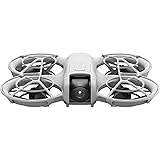
The world of unmanned aerial vehicles, more commonly known as drones, is continually expanding, offering a fascinating blend of technology and utility. As explored in the video above, grasping the fundamental concepts of these sophisticated flying machines is an excellent starting point for anyone new to the field. This guide aims to build upon those initial insights, providing a deeper understanding of drone basics, their diverse components, various classifications, and widespread applications.
Understanding the Core: What Exactly is an Unmanned Aerial Vehicle (UAV)?
An Unmanned Aerial Vehicle, often simply called a drone, is fundamentally an aircraft designed to operate without a human pilot, crew, or passengers on board. This distinction is crucial, as it allows for operations in environments too dangerous or impractical for manned aircraft. While a traditional aircraft relies on direct human control within the cockpit, a UAV is remotely controlled by a pilot from the ground or, increasingly, operates with varying degrees of autonomy, following pre-programmed flight plans or responding to real-time inputs.
Imagine if a package needed to be delivered across a congested city without encountering traffic; a drone might be deployed for this task. The absence of an onboard human allows for designs that are lighter, smaller, and more fuel-efficient, leading to significant versatility in their deployment. Consequently, these machines have become indispensable across numerous sectors, from recreational flying to complex industrial applications.
The Inner Workings: Essential Subsystems of Modern Drones
At its heart, a drone is a complex system comprising several interconnected subsystems, each playing a vital role in its operation. These can be broadly categorized into electrical, software, and mechanical components, all working in concert to achieve flight and mission objectives. Understanding these fundamental drone basics is key to appreciating their capabilities.
Electrical Subsystems: The Power and the Pulse
Just like a personal computer, a drone relies on sophisticated electrical components to function. These are typically classified into input devices, output devices, storage, and communication devices. However, the specific configuration of these elements is often dictated by the drone’s intended application.
-
Input Devices: These components gather information from the environment or human operators. Think of cameras, which capture visual data; sensors, which detect everything from altitude (barometer) and acceleration (accelerometer) to orientation (gyroscope) and location (GPS module); and remote controls, which translate human commands into digital signals. Imagine if a surveillance drone required specific environmental data; advanced meteorological sensors might be integrated as input devices.
-
Output Devices: Conversely, output devices translate processed data into actions or observable information. Motors, controlled by Electronic Speed Controllers (ESCs), spin the propellers; LEDs provide visual feedback or navigation lights; and displays on a ground control station show real-time flight data. For instance, a drone designed for agricultural spraying would have specialized output nozzles controlled by the system.
-
Storage: Data collected by drones, whether it’s high-resolution video footage from a surveillance mission or telemetry logs from a test flight, requires storage. Solid-State Drives (SSDs), flash memory, and secure digital (SD) cards are commonly employed. This storage capacity is crucial for post-mission analysis and compliance.
-
Communication Devices: The ability to transmit and receive data is paramount for drone operation. Wired LAN (Local Area Network) may be used for ground station connections, while wireless LAN, mobile networks (3G, 4G, LTE), and specialized radio frequency links facilitate control and data transmission over distances. GPS modules are indispensable for navigation and precise positioning, contrasting sharply with older systems that relied on line-of-sight visual piloting.
It is important to note that the specific selection of these subsystems is driven by the drone’s purpose. For example, a surveillance drone typically requires a high-resolution camera, a System-on-Chip (SOC) capable of processing large data streams, and robust wireless communication modules (Wi-Fi, 3G/4G) for live or recorded data transmission. Memory and internal storage, along with flight controllers, form the essential core for such applications.
Software Architecture: The Digital Brain
The intelligence behind drone operation is rooted in its software, which can be broken down into several layers:
-
Firmware Components: This is the low-level software embedded directly into the drone’s hardware, responsible for basic operations and direct hardware control. It ensures the motors spin correctly and sensors are read accurately.
-
Operating System (OS) and Drivers: Similar to a computer, drones often run a lightweight OS that manages resources and provides a platform for higher-level applications. Drivers are specific software components that enable the OS to communicate with various hardware peripherals.
-
Sensing, Navigation, and Control: This layer handles the interpretation of sensor data, determines the drone’s position and orientation, and executes flight control algorithms to maintain stability and follow flight paths. This is where the magic of autonomous flight often happens.
-
Application-Specific Components: These are custom software modules designed for particular missions, such as image processing for mapping, target tracking for surveillance, or delivery route optimization for logistics.
Mechanical Systems: The Structure and Form
The mechanical systems provide the physical structure and form factor (ID – industrial design) of the drone. This includes enclosures, frames, and the intricate assembly of various parts. The design dictates not only the drone’s appearance but also its aerodynamics, durability, and ability to carry payloads. The most popular drones often feature X-frames or H-frames, which provide stable platforms for propellers and components.
Beyond the frame, critical mechanical components include propellers, motors that drive them, landing gears for safe ground operations, and a body that houses the Printed Circuit Board Assembly (PCBA), flight controllers, motor drivers, and, crucially, the battery—the primary power source. The integration of these mechanical and electrical parts is a complex engineering feat, ensuring both structural integrity and operational efficiency.
Diverse Classifications: Categorizing the World of Drones
Drones are incredibly diverse, leading to various classification methods based on their design, capabilities, and intended use. These distinctions are not just academic; they influence regulations, operational parameters, and practical applications.
Classifying Drones by Weight: From Nano to Large
One of the most common ways to classify drones is by their maximum take-off weight. This categorization is particularly relevant for regulatory purposes, as heavier drones often come with stricter operational rules and licensing requirements. The video highlights five key weight categories:
-
Nano UAVs: These are the smallest and lightest drones, weighing 250 grams or less. Imagine a drone small enough to fit in the palm of your hand, often used for recreational flying or basic indoor inspections due to their low risk profile.
-
Micro UAVs: Falling between 250 grams and 2 kg, these drones offer a balance of portability and enhanced capabilities. They are popular for amateur photography, outdoor recreational use, and some educational applications, often being more robust than nano drones.
-
Miniature UAVs (Small UAVs): With weights ranging from 2 kg to 25 kg, these are serious tools. This category includes many professional photography and videography drones, as well as those used for surveying, mapping, and early stage delivery trials. Their larger size allows for more powerful motors, longer flight times, and the capacity to carry more advanced cameras or sensors.
-
Medium UAVs: These larger drones, weighing from 25 kg to 150 kg, are typically used for industrial applications, heavy-duty inspections, larger cargo delivery, or specialized agricultural tasks. Their size and payload capacity enable them to carry sophisticated equipment and operate in more demanding conditions.
-
Large UAVs: Any drone exceeding 150 kg is classified as a large UAV. These are often complex, high-end systems used for military operations, large-scale logistics, or significant scientific research. Their operation is subject to the most stringent regulations, reflecting their size and potential impact.
Degrees of Operational Autonomy: From Remote Control to Fully Autonomous
The level of human intervention required during a drone’s flight is another crucial classification. This “degree of autonomy” ranges from direct, real-time control to fully independent operations.
-
Remotely Piloted: In this mode, a human pilot directly controls the drone’s movements using a remote control. This offers maximum flexibility and immediate response to changing conditions, similar to flying a model airplane.
-
Semi-Autonomous/Hybrid: Here, the drone might perform certain tasks autonomously, such as maintaining altitude or following a GPS waypoint, while a human pilot retains the ability to override controls. Imagine a drone that flies a pre-planned route for mapping, but allows manual intervention if an obstacle appears.
-
Fully Autonomous: These drones are capable of executing an entire mission from takeoff to landing without human intervention. They follow complex pre-programmed flight plans, react to environmental changes using onboard intelligence, and return to base automatically upon mission completion or low battery. This capability is rapidly evolving, leading to applications like automated delivery networks.
Altitude Capabilities and Operational Range: Reaching New Heights
Drones are also categorized by the maximum altitude they can reach and their operational range, which dictates their potential use cases:
-
Handheld Drones: These can fly up to 2,000 feet (approximately 600 meters) with a maximum range of around 2 kilometers. They are ideal for local, short-range tasks like close-up inspections or personal photography.
-
Close-Range Drones: Reaching altitudes of about 5,000 feet (1,500 meters) and covering up to 10 kilometers, these are suitable for extended local operations, such as inspecting larger construction sites or monitoring small agricultural areas.
-
NATO Type Drones: Capable of flying up to 3,000 meters (around 10,000 feet) with a 50-kilometer range, these are often used for more serious reconnaissance or surveillance, offering a wider coverage area.
-
Tactical Type Drones: These drones can ascend to 5,500 meters (18,000 feet) and have an impressive range of 160 kilometers. They are utilized for tactical military operations or extensive environmental monitoring.
-
MALE (Medium Altitude Long Endurance): Operating at approximately 30,000 feet (9,000 meters) and boasting a 200-kilometer range, MALE drones are designed for sustained observation and patrol missions over vast areas. Their endurance allows for hours of continuous flight.
-
HALE (High Altitude Long Endurance): These highly specialized drones also fly at around 30,000 feet (9,100 meters) but possess an indefinite range, enabling them to stay aloft for days or even weeks. They are often used for atmospheric research, continuous surveillance, or acting as pseudo-satellites for communication relays.
-
Hypersonic/High-Speed Drones: Reaching extreme altitudes of 50,000 feet (15,200 meters) with a 200-kilometer range, these are typically experimental or military platforms designed for rapid deployment or extreme environment testing. Some advanced drones are even being developed for low-earth orbit capabilities.
Mission-Specific Drones: Tailored for Purpose
The applications of drones are as varied as their designs, leading to classifications based on their primary mission:
-
Combat Drones (UCAV): Unmanned Combat Aerial Vehicles are designed for high-risk military missions, often carrying missiles or other armaments. They resemble traditional aircraft and are deployed in situations where putting human pilots at risk is undesirable.
-
Logistics Drones: These UAVs are built for delivering goods and cargo. Companies like Amazon and Domino’s have pioneered their use for package and food delivery, showcasing their efficiency in bypassing ground traffic. Imagine a future where critical medical supplies are delivered to remote or disaster-stricken areas by a specialized logistics drone, ensuring rapid response.
-
Civil Drones: For general usage, civil drones are widely adopted in agriculture for crop monitoring, spraying, and surveying, as well as in construction for site inspections, progress tracking, and 3D mapping. They are invaluable for collecting aerial data and photography, offering perspectives unreachable by ground-based methods.
-
Reconnaissance Drones: Also known as mission control drones, these are designed for intelligence gathering, often in hostile environments. They are typically small, stealthy, and equipped with advanced sensors to collect information without being detected, allowing for automated task execution and return to base.
-
Target and Decoy Drones: These are distinct from combat drones, serving to simulate enemy aircraft or provide targets for ground and aerial gunnery practice. They are crucial for training and testing defensive systems, offering a cost-effective alternative to using manned aircraft for such purposes.
-
Research and Development (R&D) Drones: A broad category encompassing drones used for scientific purposes, such as collecting weather data, atmospheric sampling, or even providing internet connectivity in remote regions. These platforms often push the boundaries of drone technology and design.
Wing Types: Fixed-Wing vs. Rotary-Wing
The fundamental design of a drone’s wings (or lack thereof) significantly impacts its flight characteristics and utility.
-
Fixed-Wing Drones: These drones resemble traditional airplanes, featuring rigid wings that generate lift through forward motion. They typically have a single motor and are known for excellent battery life and the ability to fly at very high altitudes and cover large distances efficiently. However, they require a runway (or catapult launch) for takeoff and a significant clear area for landing, contrasting with the vertical capabilities of other types. The design and operation of fixed-wing drones often require a solid understanding of aerodynamics, making them more expensive and complex to design.
-
Rotary-Wing Drones: This category encompasses drones that generate lift using spinning rotors, allowing for vertical takeoff and landing (VTOL). This capability makes them incredibly versatile for operations in confined spaces. Rotary-wing drones are further divided into single-rotor and multi-rotor types.
-
Single-Rotor Drones: These closely resemble helicopters, with one main rotor for lift and thrust, and a smaller tail rotor for directional control. They are exceptionally strong in propelling heavy payloads and are designed for both hovering and directional changes. Their payload capacity is often superior, and they tend to consume less power than multi-rotor systems for equivalent tasks. However, piloting single-rotor drones can be more challenging due to their inherent instability.
-
Multi-Rotor Drones: These are the most commonly recognized drones, characterized by multiple rotors (propellers) for lift and control. Their popularity stems from their ease of control and exceptional stability, making them ideal for aerial photography and videography. The ability to take off and land vertically almost anywhere is a significant advantage. Multi-rotor drones are classified by the number of propellers they possess:
-
Tricopters: Equipped with three propellers, offering agility.
-
Quadcopter: The most prevalent type, featuring four propellers. These are highly stable and widely used by hobbyists and professionals alike for their balanced performance.
-
Hexacopters: With six rotors, offering increased lift capacity and redundancy (can often fly even if one motor fails).
-
Octacopters: Boasting eight rotors, providing maximum lift and the highest level of stability and redundancy, often used for carrying heavy cinema cameras or specialized equipment.
While multi-rotors are easy to fly and stable, their primary disadvantage lies in their power consumption. More motors equate to more power usage, which can limit flight duration compared to fixed-wing or even single-rotor designs.
-
-
Getting Started: Drone Assembly Types for Every User
For those looking to enter the world of drone flying, options are available to suit various skill levels and technical comfort zones:
-
Ready-to-Fly (RTF): As the name suggests, these drones come pre-assembled and ready to fly right out of the box. They are perfect for beginners who want to experience drone flight without the complexities of assembly or programming. Imagine purchasing a drone today and having it airborne within minutes, without needing any prior technical knowledge.
-
Bind-and-Fly (BNF): These models come fully assembled but without a transmitter (remote control). They are ideal for users who already own a compatible transmitter and want to avoid purchasing a new one. It is essential to ensure compatibility, however, as rapidly evolving technologies can sometimes lead to issues between older transmitters and newer drone models.
-
Almost-Ready-to-Fly (ARF): Designed for hobbyists and those who enjoy building, ARF kits include most of the necessary components but require some assembly, wiring, and potentially soldering. This option offers a deeper understanding of drone construction and allows for customization, although it does demand a certain level of technical skill.
Propeller Material: Plastic vs. Carbon Fiber
The choice of propeller material is another seemingly small but significant detail. Plastic propellers are generally more affordable and flexible, making them suitable for recreational use where minor crashes might occur. They can absorb some impact without immediately shattering. However, for serious applications where performance, rigidity, and durability are paramount, carbon fiber propellers are preferred. Carbon fiber offers superior strength-to-weight ratio, reduces vibrations, and maintains shape more effectively at high RPMs, contributing to more stable and efficient flight. Imagine the precision required for aerial mapping; carbon fiber propellers would be chosen for their stability and accuracy over flexible plastic ones.
Understanding these fundamental drone basics, from their definition and internal components to their diverse classifications and various assembly options, lays a strong foundation for appreciating the incredible capabilities and potential of Unmanned Aerial Vehicles in our modern world.
Pre-Flight Check: Your Drone Basics Q&A
What is an Unmanned Aerial Vehicle (UAV) or drone?
An Unmanned Aerial Vehicle (UAV), commonly known as a drone, is an aircraft designed to operate without a human pilot, crew, or passengers onboard. They can be remotely controlled by a pilot or fly with varying degrees of autonomy.
What are the main types of components that make up a drone?
A drone is comprised of several interconnected subsystems: electrical components (like motors, sensors, and batteries), software (for flight control and navigation), and mechanical systems (such as the frame and propellers).
How are drones typically classified by their weight?
Drones are often classified by their maximum take-off weight, ranging from Nano UAVs (250 grams or less) for recreational use to Large UAVs (over 150 kg) for industrial or military applications.
What is the difference between fixed-wing and rotary-wing drones?
Fixed-wing drones resemble traditional airplanes and are efficient for long-distance flights, while rotary-wing drones use spinning rotors to allow for vertical takeoff, landing, and hovering, making them very versatile.
What does ‘Ready-to-Fly’ (RTF) mean for drones?
Ready-to-Fly (RTF) means the drone comes pre-assembled and is ready to fly right out of the box. This option is perfect for beginners as it requires no prior assembly or programming.