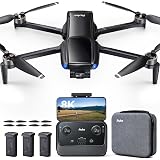
Have you ever wished for a single aerial device that combines the agility of a drone with the expansive range and speed of an RC plane? Many enthusiasts find themselves at a crossroads, needing the vertical takeoff and landing capabilities of a drone for restricted spaces, yet yearning for the vast distances and endurance only a fixed-wing aircraft can offer. This challenge is precisely what the innovative Swan K1 Pro aims to address, positioning itself as a revolutionary hybrid solution for both hobbyists and aerial photographers.
The Swan K1 Pro is not just another drone; it is ingeniously designed to fuse the best aspects of multirotor drones and traditional remote-controlled airplanes. This unique vertical takeoff and landing (VTOL) craft transitions seamlessly from hover mode to plane mode mid-flight, offering unparalleled flexibility. It is an ideal choice for anyone looking to capture stunning aerial footage over long distances without the limitations of needing a runway or large open area for takeoff and landing. As observed in the video above, its modular design and user-friendly features make it accessible, even for those new to the world of hybrid aircraft.
Understanding the Swan K1 Pro’s Core Capabilities
At its heart, the Swan K1 Pro is engineered for versatility and performance. It is a robust platform that caters to both casual flyers and those with more serious aerial imaging aspirations. The ability to ascend and descend vertically like a drone, then cruise efficiently horizontally like a plane, sets it apart from many competitors. This dual functionality is made possible by sophisticated flight control systems that manage the transition, ensuring stability throughout the flight envelope.
Hybrid Flight Mechanics: A Closer Look
The transition between flight modes is a critical feature that defines the Swan K1 Pro. During takeoff, the multiple propellers operate like a standard quadcopter, lifting the unit straight up. Once sufficient altitude is achieved, the flight controller can be commanded to switch to fixed-wing mode. In this mode, forward thrust is primarily generated by two larger propellers, while the wings provide lift. This allows for significantly faster speeds and much greater energy efficiency compared to constant drone flight, translating directly into extended flight times.
A crucial component for flight safety and performance in fixed-wing mode is the pitot tube. This small, often overlooked sensor measures airspeed. As highlighted in the accompanying video, the Swan K1 Pro utilizes this data to prevent stalls. Should the aircraft detect that its airspeed is too low, the system is designed to automatically intervene, adjusting flight parameters to maintain lift and avoid an uncontrolled descent. This passive safety measure is a testament to the thoughtful engineering behind the aircraft, enhancing reliability for all users.
Advanced Imaging and Communication Features
For aerial photography and videography, the Swan K1 Pro is well-equipped. It supports a range of external cameras, including popular action cameras like the GoPro up to version 9. This compatibility means users are not restricted to proprietary camera systems, offering flexibility to choose their preferred imaging device based on quality, features, or existing equipment. The camera is securely strapped into a designated slot, ensuring stability during dynamic flights.
In addition to external camera support, a built-in FPV (First-Person View) camera is provided, transmitting real-time video back to the pilot. This FPV system boasts an impressive range, capable of sending back live footage from approximately 5 kilometers away. This is incredibly useful for navigating the aircraft from the pilot’s perspective, especially when it flies beyond visual line of sight. The integration of this FPV feed directly into the remote controller’s display ensures a cohesive and immersive flight experience.
The Intelligent Remote Controller and Flight Management
Controlling an advanced hybrid VTOL plane like the Swan K1 Pro requires a sophisticated interface, and its included remote controller certainly delivers. Equipped with a bright, high-resolution touchscreen display, it remains easily viewable even in direct sunlight. This is a significant advantage over controllers that rely on smartphone screens, which can often struggle with glare outdoors. The controller operates on an Android operating system, suggesting potential for future app integration and customization, although connecting to the Google Play Store for additional apps may require exploration.
Key Controller Functions and GPS Integration
The remote controller is packed with essential functions that enhance the flying experience. Dedicated buttons allow for seamless switching between drone mode and RC airplane mode. A “Return to Home” (RTH) button is also present, enabling the aircraft to autonomously fly back to its takeoff point and land. This feature is a lifesaver for beginners and experienced pilots alike, providing a safety net in case of disorientation or low battery. The speaker in the video specifically notes that a common initial troubleshooting step for the RTH feature is to press the button an additional time after a landing, to clear its state and allow subsequent takeoffs, a valuable piece of undocumented information for new users.
GPS functionality is central to the Swan K1 Pro‘s ease of use. It allows for stable hovering, precise positioning, and waypoint navigation. Pilots can toggle between GPS-assisted position mode and manual mode, catering to different skill levels and flight preferences. The real antennas on the controller contribute to its substantial control range, which extends far beyond the FPV feed, up to an astounding 40 kilometers when utilizing compatible mapping software for waypoint missions. This extensive range facilitates long-distance surveying, exploration, and data collection missions that would be impractical with most consumer drones.
Battery Life and Durability
The controller itself features a built-in, long-lasting battery that is rechargeable via USB-C. This robust power source is praised in the video for its longevity, often lasting for multiple flight sessions on a single charge. This attention to endurance extends to the aircraft’s main flight battery as well. A substantial 5500 mAh battery with an XT60 connector powers the Swan K1 Pro, providing an impressive 60 minutes of flight time. This one-hour endurance is a significant achievement for a camera drone of this type, enabling extended missions without frequent landings for battery swaps.
Moreover, the construction quality of the Swan K1 Pro is notable. The airframe is made from a highly compressed foam, which is highlighted as being superior to materials often found in other RC aircraft. This specialized foam contributes to the aircraft’s lightness while ensuring exceptional strength and durability, making it more resilient to minor impacts and wear and tear during regular use.
Assembly and Pre-Flight Preparations
Despite its advanced capabilities, the Swan K1 Pro is designed for quick and straightforward assembly. The modular wings simply snap into place, making it easy to transport in its custom carrying case and set up at the flying site. Clear labeling on the wing sections, as demonstrated by the speaker, helps prevent incorrect assembly and potential damage.
Before the first flight, and periodically thereafter, a compass calibration is required to orient the drone to its local magnetic field. This one-time process ensures accurate GPS navigation. Furthermore, calibrating the pitot tube is a crucial pre-flight step, setting the airspeed sensor to zero for precise in-flight measurements. These simple calibration routines are easily initiated from the controller’s interface and are clearly communicated to the user, ensuring the aircraft is ready for safe and optimal flight performance.
Advanced Features for Enhanced Flight
Beyond manual control, the Swan K1 Pro offers several features that enhance safety and flight planning:
- Geofencing: As demonstrated in the video, users can set a virtual perimeter (geofence) on the map. If the aircraft approaches or attempts to cross this boundary, it is programmed to automatically turn back or initiate a Return to Home sequence. This is invaluable for flying within designated areas, preventing accidental incursions into restricted airspace, or simply keeping the aircraft within a comfortable operating range.
- Waypoint Missions: With compatible mapping software installed on the Android controller, complex flight paths consisting of multiple waypoints can be programmed. The Swan K1 Pro can then execute these missions autonomously, flying to each point, performing pre-programmed actions (like hovering or taking photos), and then returning. This capability transforms the aircraft into a powerful tool for automated aerial surveys and data collection.
- DJI FPV System Compatibility: For users who already own DJI FPV goggles or similar systems like Caddx Vista, the Swan K1 Pro offers the option to integrate these for an even more immersive and high-quality FPV experience. This flexibility is a significant draw for advanced pilots who appreciate the superior video transmission and low latency offered by dedicated FPV systems.
The Swan K1 Pro clearly differentiates itself in a crowded market of drones and RC planes by providing a robust, versatile, and user-friendly hybrid platform. Its combination of beginner-friendly features like GPS-assisted flight and RTH, along with advanced capabilities like long-range flight and external camera support, positions it as a top-tier choice for those seeking the ultimate vertical takeoff and landing experience.
Lifting Off: Your Swan K1 PRO Questions & Answers
What is the Swan K1 Pro?
The Swan K1 Pro is a unique hybrid aircraft that combines the agility of a drone with the expansive range and speed of an RC plane. It’s designed for both hobbyists and aerial photographers.
How does the Swan K1 Pro fly?
It performs vertical takeoffs and landings like a drone, then seamlessly transitions to fixed-wing plane mode for efficient, long-distance horizontal flight. This dual functionality is managed by sophisticated flight control systems.
Is the Swan K1 Pro good for beginners?
Yes, it includes beginner-friendly features such as GPS functionality for stable hovering and precise positioning, and a ‘Return to Home’ button for autonomous landing.
What kind of camera can I use with the Swan K1 Pro?
It supports external action cameras like the GoPro (up to version 9) for high-quality footage. It also has a built-in FPV (First-Person View) camera that transmits real-time video to the pilot.