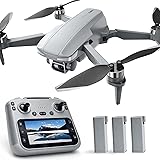
The global military unmanned aerial systems (UAS) market continues its rapid expansion. Experts project this market will exceed $30 billion by 2030. This impressive growth underscores the critical role drones now play in modern defense. The accompanying video offers a direct look into a small part of this evolution. It shows U.S. Marines conducting the assembly and initial operation of a Vertical Take-Off and Landing (VTOL) drone. This demonstration highlights the hands-on aspects of advanced military drone operation. Such systems are vital for tactical superiority and intelligence gathering.
Understanding VTOL Drones in Military Applications
VTOL capability defines these advanced aerial platforms. They can take off and land vertically. This eliminates the need for runways or launch catapults. Consequently, VTOL drones offer unmatched operational flexibility. They deploy rapidly from diverse locations. These include confined spaces or unprepared terrain. This adaptability is crucial for forward-deployed U.S. Marines.
Traditional fixed-wing drones require significant space. Rotary-wing drones consume more fuel. VTOL drones blend the best features of both. They offer efficient forward flight. They also provide precise hovering capabilities. This hybrid design proves invaluable for military reconnaissance missions. It enhances surveillance capabilities significantly.
Assembling Advanced UAS for Field Deployment
The video demonstrates a detailed assembly process. U.S. Marines meticulously connect various components. Precision during this phase is paramount. Each screw and wire connection impacts performance. Proper torque application ensures structural integrity. This prevents potential mid-flight failures.
Modern military drones feature modular designs. These designs facilitate quick assembly and disassembly. Troops can transport components easily. This modularity reduces the logistical footprint. It also allows for rapid field repairs. The dated October 26, 2023, confirms the recency of such field operations. This adaptability boosts mission readiness for U.S. Marine units.
The Importance of Pre-Flight Checks and System Integration
Rigorous pre-flight checks are indispensable. Marines inspect every system connection. They verify all flight surfaces. Software calibration also occurs before launch. This ensures the VTOL drone operates as expected. Proper system integration guarantees mission success. It also safeguards against costly equipment damage. The brief dialogue in the video hints at the coordination required.
Connecting wires and tightening bolts form crucial steps. These actions prepare the drone for flight. An operational team works together. They ensure every detail is correct. This collective effort defines successful field operations. The U.S. Marines demonstrate this teamwork expertly.
Tactical Roles of VTOL Drones for U.S. Marines
U.S. Marines leverage VTOL drones extensively. These drones conduct critical reconnaissance missions. They provide real-time battlefield intelligence. Furthermore, they support surveillance operations. Troops gain enhanced situational awareness. This leads to better decision-making in complex environments.
VTOL drones can also assist with target acquisition. They identify threats from a safe distance. This minimizes risk to ground forces. Some models even deliver small payloads. This can include vital supplies or sensors. The versatility of these unmanned aircraft systems strengthens tactical advantage for military forces.
Expanding Beyond Basic Flight: Advanced Capabilities
Beyond simple flight, these drones offer advanced functions. They integrate sophisticated sensor packages. These include electro-optical and infrared cameras. They also carry laser designators. These capabilities allow for multi-spectral data collection. Marines use this data for detailed analysis. Consequently, they maintain an operational edge.
Many VTOL drones feature autonomous flight modes. These modes reduce operator workload. They allow for complex flight paths. Operators can focus on data interpretation. This enhances mission efficiency. The evolving technology continuously refines military drone operation.
Operational Workflow: From Launch to Landing
The launch sequence for a VTOL drone is precise. Operators perform final system checks. The drone initiates its vertical ascent. Careful remote piloting guides its flight path. This ensures proper mission execution.
During flight, operators monitor telemetry data. They track the drone’s position and status. Adjustments occur as needed. The landing phase requires precision. Operators carefully descend the aircraft. They ensure a safe and controlled touchdown. This entire cycle exemplifies diligent military drone operation.
The video concludes with the drone landing safely. This showcases a successful flight evolution. Post-flight procedures then follow. These involve data extraction and system inspection. Such meticulous processes ensure readiness for future missions. U.S. Marines depend on this reliability.
The integration of advanced VTOL drones marks a new era in defense. These systems provide unmatched flexibility and intelligence. They empower U.S. Marines with critical capabilities. The continuous development of military drone technology promises even greater operational efficiency and tactical advantages for forces worldwide.
Ask the Corps: Your VTOL Drone Questions
What does ‘VTOL’ mean in the context of drones?
VTOL stands for Vertical Take-Off and Landing. This means VTOL drones can launch and land straight up and down, without needing a runway.
Why are VTOL drones useful for the U.S. Marines?
They provide unmatched operational flexibility, allowing Marines to deploy them rapidly from various locations, even confined or unprepared areas. This is crucial for tactical superiority and intelligence gathering.
How are military VTOL drones put together and prepared for flight?
These drones have modular designs that allow for quick assembly in the field. Before flight, Marines conduct rigorous pre-flight checks, inspecting all connections, flight surfaces, and calibrating software.
What are the main tasks VTOL drones perform for the Marines?
VTOL drones are primarily used for critical reconnaissance missions, providing real-time battlefield intelligence, and supporting surveillance operations. They help enhance situational awareness for ground forces.