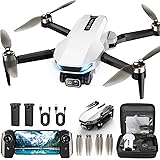
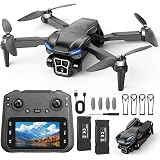
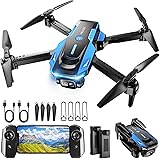
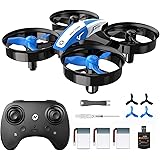
When considering the landscape of unmanned aerial vehicles, a fascinating comparison often emerges between commercially manufactured drones and their 3D-printed counterparts. The brief video above offers a compelling, albeit concise, snapshot of this debate, highlighting that a 3D printed drone surprisingly achieved a flight time of 201 seconds, surpassing a ‘real’ drone’s 190 seconds. This initial data point prompts a deeper exploration into what truly distinguishes these two approaches to drone ownership and operation.
The immediate observation regarding flight duration suggests that the conventional wisdom favoring mass-produced devices may be challenged. While a ‘real’ drone might be perceived as inherently superior due to professional engineering and material selection, the specific example shown reveals that custom-built alternatives can indeed hold their own, at least in certain metrics. This outcome invites an examination of the various factors that contribute to a drone’s overall performance, durability, and value, extending beyond just flight time.
Deconstructing the Costs: 3D Printed Drone vs. Commercial Options
The video points out that the 3D printed option was associated with a cost of $12.99, while the ‘real’ drone was listed at $35.99. These figures are intriguing and likely represent the cost of the primary airframe or significant structural components, rather than the complete, ready-to-fly units. For instance, the $12.99 for a 3D printed drone component might refer to the cost of the filament used, a small portion of the total investment for a fully functional flying machine. Comparatively, the $35.99 for a ‘real’ drone part could indicate the price of an entry-level, injection-molded frame or a basic toy drone, where the cost of manufacturing is spread across many units.
A broader perspective is often taken into account when evaluating the financial outlay for a complete drone. With 3D printed drones, the cost structure is distributed; there is an initial investment in a 3D printer, followed by the expense of materials like PLA, PETG, or ABS filaments, which can be relatively inexpensive per kilogram. However, additional components such as motors, ESCs (Electronic Speed Controllers), flight controllers, receivers, and batteries must also be acquired separately. This approach allows for greater control over individual component quality and price, akin to assembling a custom-built computer where each part is selected independently. Therefore, the total cost can be highly variable, ranging from very budget-friendly for small, simple designs to significantly more expensive for advanced, high-performance builds.
Conversely, commercially available drones, often referred to as ‘real’ drones, are purchased as complete, ready-to-fly (RTF) packages. These often present an all-inclusive price that covers not only the airframe and electronics but also research and development, assembly, quality control, branding, and sometimes a warranty. For many, the convenience of an out-of-the-box solution is a significant draw, even if the upfront cost appears higher. The comparison here is much like purchasing a pre-assembled furniture piece versus buying raw lumber and building it yourself; one saves time and effort, the other offers customization and a potentially lower material cost.
Flight Performance: Why a 3D Printed Drone Can Excel
The fact that the 3D printed drone achieved a longer flight time in the video is a notable outcome. Several elements are often considered to contribute to such a performance advantage. Foremost among these is weight. A well-designed 3D printed frame can be meticulously optimized for minimal material usage while maintaining structural integrity. By leveraging topology optimization software, designers are able to create intricate lattice structures that are incredibly light yet robust. This reduction in overall mass directly translates to lower power requirements for lift, thus conserving battery life and extending flight duration. It is much like a cyclist choosing a lightweight carbon fiber frame over a heavier steel one; less mass means less energy expended to move it.
Furthermore, the ability to customize aerodynamics is a significant factor. While commercial drones undergo extensive aerodynamic testing, their designs are largely fixed once mass production begins. With a 3D printed drone, iterative design improvements can be made quickly and cost-effectively. Small adjustments to arm profiles, fuselage shape, or propeller shrouds can be printed and tested rapidly, leading to incremental gains in efficiency. This iterative process allows enthusiasts and engineers to fine-tune designs for specific flight characteristics, whether it is for speed, agility, or endurance. It is analogous to a race car designer having the freedom to repeatedly test and modify components in a wind tunnel until optimal performance is achieved.
The choice of battery also plays a crucial role. While the video does not detail the battery specifications, it is often found that hobbyists building 3D printed drones have the freedom to select specific battery packs based on capacity-to-weight ratios that best suit their design goals. This contrasts with many commercial drones where the battery is proprietary and optimized for the manufacturer’s overall design, potentially sacrificing maximum flight time for factors like charging speed or form factor. The synergy between a lightweight frame and an optimally chosen battery can collectively result in superior flight endurance, as evidenced in the video’s comparison.
Durability and Repairability: The Practical Edge of 3D Printing
Beyond performance metrics, the practicalities of durability and repairability are often considered by drone enthusiasts. Commercially produced drones, while often featuring sophisticated designs and robust materials like carbon fiber composites or aerospace-grade aluminum, can be costly to repair. A broken arm or a cracked frame on a ‘real’ drone often necessitates purchasing an expensive replacement part, or in some cases, an entirely new unit, if proprietary components are involved. This can be particularly frustrating after a minor crash.
In contrast, 3D printed drones offer an inherent advantage in terms of repairability. If a component breaks, a new one can simply be printed. The digital files for the drone’s parts are typically stored and can be reproduced on demand, reducing both the cost and the waiting time for repairs. This modularity means that an entire new frame is not usually needed; only the damaged section is replaced. This aspect resonates strongly with hobbyists and educators, as it fosters a culture of learning and experimentation without the fear of prohibitive repair costs. It is much like having a spare tire for a car versus needing to replace the entire wheel assembly; one is far more accessible and economical.
The choice of material for 3D printing also plays a significant role in durability. While PLA is common for its ease of printing, more robust filaments like PETG or even carbon fiber-infused nylon can be utilized for parts requiring greater strength and impact resistance. This ability to tailor material selection to specific structural needs further enhances the resilience of 3D printed designs, allowing them to withstand various operational stresses. The ability to iterate on designs and print stronger versions after testing also contributes to a progressively more durable drone over time.
Customization and Innovation: The Core of 3D Printed Drones
The true power of a 3D printed drone lies in its unparalleled potential for customization. Unlike commercial drones which offer a fixed design, 3D printing liberates the designer and user to tailor every aspect of the drone. This includes the size and shape of the frame, the mounting points for various sensors and cameras, and even the internal layout of components. Such flexibility allows for the creation of drones specifically designed for unique applications, whether it is for aerial photography with a specific camera, environmental monitoring, or specialized delivery tasks. This level of personalization is akin to a sculptor being able to mold clay into any form, rather than being limited to pre-cast shapes.
This freedom extends to innovation. The open-source community around 3D printed drones is vibrant, with countless designs, modifications, and improvements shared online. This collaborative environment accelerates development, allowing individuals to build upon the work of others, remix designs, and push the boundaries of drone technology. New concepts, such as integrated sensor mounts, unique landing gear solutions, or novel propulsion systems, can be rapidly prototyped and tested. This iterative design process, where an idea can go from concept to physical prototype in a matter of hours, positions 3D printing as a formidable tool for rapid innovation in the drone space. It is much like a collective brainstorming session where ideas are not just discussed but immediately tangible.
Who Benefits Most: Navigating the Drone Ecosystem
Understanding the distinctions between a 3D printed drone and a commercially manufactured one helps to identify which option best suits different individuals and their objectives. For those seeking immediate flight, reliability, and integrated features without the need for technical assembly or troubleshooting, the commercial ‘real’ drone is often the preferred choice. These drones are typically user-friendly, come with comprehensive manuals, and offer a seamless flying experience, ideal for beginners, casual users, or professionals requiring out-of-the-box performance for tasks such as real estate photography or inspections. The user experience is often streamlined, offering a predictable and consistent performance.
Conversely, the 3D printed drone appeals strongly to hobbyists, educators, engineers, and those with a strong desire to understand the inner workings of technology. It is a journey of learning, from designing or selecting a blueprint, sourcing components, to the physical assembly and calibration. This hands-on experience provides invaluable knowledge in aerodynamics, electronics, programming, and mechanical design. It is also an excellent pathway for those on a budget who are willing to invest their time and effort instead of a larger sum of money. The satisfaction derived from building and flying one’s own creation is often a significant motivator, making the 3D printed drone a symbol of personal achievement and technical prowess.
Ultimately, the “win” highlighted in the video regarding flight time is merely one facet of a multi-dimensional comparison. Both types of drones offer distinct advantages, serving different segments of the market and fulfilling varied needs. The choice between a 3D printed drone and a ‘real’ drone is not simply about performance numbers but about embracing different philosophies of technology, creativity, and engagement.
Your Drone Questions: 3D Printed vs. Real
What is a 3D printed drone?
A 3D printed drone is an unmanned aerial vehicle whose structural parts, like its frame, are created using a 3D printer, allowing for custom designs and component choices.
Are 3D printed drones expensive to make?
The material cost for 3D printed parts can be relatively low, but the total expense depends on other components like motors, batteries, and the initial investment in a 3D printer. This approach allows for flexible budgeting.
Can a 3D printed drone fly as long as a store-bought drone?
Yes, some 3D printed drones can achieve comparable or even longer flight times, often due to their lightweight custom-designed frames and the ability to choose optimized batteries.
Is it easy to fix a 3D printed drone if it gets damaged?
Yes, 3D printed drones are very repairable because you can simply print new replacement parts for any broken sections, making repairs often cheaper and quicker than buying proprietary components for commercial drones.