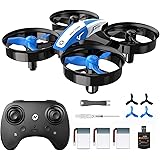
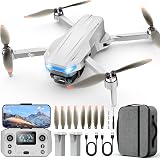
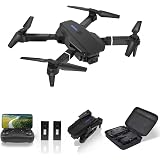
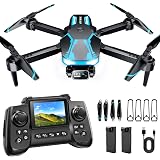
Statistically, the global drone market is projected to reach over $58 billion by 2026, driven significantly by enthusiast-driven segments like RC aviation. Among the myriad of aerial platforms, the RC tricopter stands out for its unique blend of agility and mechanical simplicity. As you’ve just witnessed in the accompanying video, the operational sounds of a drone motor, from start-up to flight and landing, encapsulate the excitement and technical prowess involved in piloting these incredible machines. This fantastic RC tricopter demonstrably showcases precision engineering and sophisticated flight dynamics in action.
1. The Unique Engineering Behind an RC Tricopter
An RC tricopter represents a distinct branch in the multirotor family, setting itself apart from more common quadcopters. Its three-motor configuration offers a unique approach to flight control, particularly for yaw maneuvers. Instead of relying solely on differential motor speeds across four props, the tricopter integrates a servo-actuated tilting mechanism on its rear motor.
This mechanical yaw control provides a more direct, almost helicopter-like feel to rotational inputs. Expert pilots often report a highly responsive and intuitive control experience, making tricopters a favorite for precision flying and certain FPV disciplines.
2. Essential Components for Optimal Tricopter Performance
Achieving the “awesome” flight dynamics seen in the video requires careful selection and integration of several core components. Each element plays a critical role in the tricopter’s stability, power, and responsiveness.
Frame Design and Materials
The frame is the structural backbone, dictating the tricopter’s durability, weight distribution, and motor placement. Carbon fiber, known for its high strength-to-weight ratio, is a preferred material for high-performance builds. Thoughtful frame design ensures minimal vibration transmission to the flight controller and provides adequate protection for electronics.
Brushless Motors and Electronic Speed Controllers (ESCs)
Three high-performance brushless motors power the tricopter, delivering the thrust needed for lift and maneuverability. Matched ESCs precisely regulate power to each motor, interpreting commands from the flight controller. Proper motor and ESC sizing is crucial for efficiency and preventing thermal overload during aggressive flight.
The Flight Controller and Its Firmware
The flight controller acts as the brain, processing pilot inputs and sensor data (accelerometer, gyroscope, barometer) to maintain stable flight. Modern flight controllers run advanced firmware like Betaflight or ArduPilot, allowing extensive tuning of PID (Proportional-Integral-Derivative) loops for precise flight characteristics. Configuring these settings correctly unlocks the full potential of an RC tricopter.
The Crucial Yaw Servo Mechanism
The single servo responsible for tilting the rear motor is central to the tricopter’s identity. This servo must be robust, fast, and precise to provide crisp and stable yaw control. Any slop or delay in this mechanism directly impacts the aircraft’s yaw authority and overall flight stability.
3. Mastering Tricopter Flight Dynamics and Stability
Understanding the flight dynamics of an RC tricopter is key to successful operation. Unlike quadcopters which use four fixed motors and differential thrust for all axes, the tricopter employs a unique combination.
Pitch and roll are primarily controlled by varying the thrust of the three motors, similar to a quadcopter. However, yaw control is fundamentally different. The rear motor, mounted on a pivot, tilts left or right via a servo, vectoring its thrust. This creates a torque around the yaw axis, allowing for precise rotational movements.
Achieving optimal stability involves meticulous calibration of the flight controller’s PID parameters. These values govern how aggressively the controller corrects for deviations in pitch, roll, and yaw. Inadequate tuning can lead to oscillations, drift, or a general lack of responsiveness, hindering the pilot’s ability to execute smooth maneuvers.
4. Precision Tuning for Unparalleled RC Tricopter Performance
Fine-tuning is where expert pilots truly differentiate their RC tricopters, transforming a basic flyer into a high-performance machine. This process involves more than just loading default settings; it requires a deep understanding of flight controller parameters and their impact on flight behavior.
PID Loop Optimization
The PID controller is the heart of flight stability. Adjusting the P (proportional), I (integral), and D (derivative) gains for pitch, roll, and yaw is an iterative process. High P-gains can lead to oscillations, while low P-gains result in sluggish response. I-gains combat drift, and D-gains damp oscillations. Experienced pilots often analyze blackbox flight logs to pinpoint areas for improvement, observing motor output, gyro data, and control inputs.
Filtering and Damping Strategies
Motors and props generate vibrations that can corrupt sensor data, leading to noisy flight. Implementing appropriate software filters in the flight controller firmware, such as dynamic notch filters, helps mitigate this. Furthermore, proper physical damping, like soft-mounting the flight controller, contributes significantly to cleaner sensor readings and more stable flight.
Rate and Expo Configuration
Rates determine how fast the tricopter rotates in response to stick input, while expo (exponential) softens the stick response around the center. Pilots customize these settings to match their preferred flying style, whether it’s precise, smooth cinematic movements or aggressive freestyle acrobatics. An RC tricopter tuned for agility might have higher rates, allowing for faster flips and rolls.
5. Advancing Your RC Tricopter Experience
Beyond basic flight, the world of RC tricopters offers numerous avenues for exploration and enhancement. Pushing the boundaries of what these unique machines can do often involves integrating advanced technologies and adopting rigorous maintenance practices.
First Person View (FPV) Integration
Many tricopter enthusiasts equip their aircraft with FPV systems. This involves mounting a small camera on the tricopter, transmitting live video to goggles or a monitor worn by the pilot. FPV transforms the piloting experience, immersing the operator directly into the cockpit view and enabling incredibly precise and thrilling flight through obstacles or complex environments. The yaw authority of a tricopter is particularly advantageous in FPV for precise cornering and orientation.
Maintenance and Troubleshooting Best Practices
Regular maintenance is crucial for longevity and reliable performance. Pilots should routinely inspect motors for bearing play, check propellers for damage, and ensure all wiring connections are secure. Post-flight data analysis, especially from blackbox logs, can help diagnose subtle issues before they become critical failures. Timely replacement of worn components, particularly the yaw servo, prevents unexpected flight characteristics.
Whether you are captivated by the sleek design, the distinctive flight characteristics, or the challenge of mastering a unique aerial platform, the RC tricopter remains a compelling choice for drone enthusiasts. Its blend of mechanical elegance and acrobatic potential offers a rewarding experience for those dedicated to the craft of remote control flight.
Getting Your Tricopter Questions Off the Ground: A Q&A
What is an RC tricopter?
An RC tricopter is a unique type of remote control aircraft that uses three motors to fly, setting it apart from more common quadcopters. It is valued for its agility and simpler mechanical design.
How is an RC tricopter different from a quadcopter?
The main difference is that a tricopter has three motors, while a quadcopter has four. Tricopters also use a special tilting mechanism on their rear motor, controlled by a servo, for steering and rotation.
What are the key parts of an RC tricopter?
Essential components include the frame, three powerful brushless motors with Electronic Speed Controllers (ESCs), a flight controller that acts as the ‘brain,’ and a crucial servo mechanism for the tilting rear motor.
How does an RC tricopter turn or rotate (yaw)?
A tricopter achieves rotation (yaw) by using a servo to tilt its single rear motor. This tilting vectors the motor’s thrust, creating the force needed to turn the aircraft.
What is FPV in the context of RC tricopters?
FPV stands for First Person View, where a camera on the tricopter transmits live video to goggles or a monitor worn by the pilot. This allows you to experience flying as if you were sitting inside the drone.