Understanding the diverse array of available drone types is absolutely essential for anyone looking to enter the world of unmanned aerial vehicles. As the accompanying video succinctly illustrates, the drone industry has experienced monumental growth over the past decade, transforming from a niche hobby into a pervasive technology with applications spanning various sectors. This expansion means that the functionality and design of drones have become incredibly specialized, necessitating a clear classification to comprehend their capabilities and potential uses.
Consequently, distinguishing between different drone types allows individuals and businesses to make informed decisions regarding acquisition and deployment. Whether you are a casual enthusiast, a budding entrepreneur, or a professional considering advanced aerial solutions, grasping these fundamental distinctions is paramount. Our exploration below will delve deeper into the specific characteristics, advantages, and typical applications of these diverse drone categories, building upon the foundational knowledge presented in the video.
Multi-Rotor Drones: The Versatile Workhorses
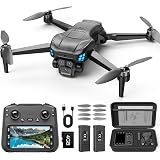
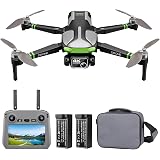
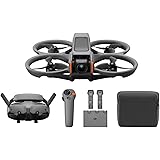
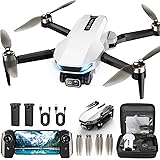
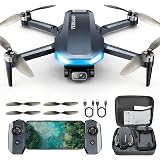
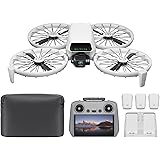
Multi-rotor drones represent the most commonly encountered drone type, recognized for their distinctive design featuring multiple propellers mounted on individual arms. These propellers, typically numbering four (quadcopters), six (hexacopters), or eight (octocopters), provide powerful lift and enable extremely precise control during flight. This design allows for vertical take-off and landing (VTOL) capabilities, alongside the crucial ability to hover stably in a fixed position, which is invaluable for numerous tasks.
Furthermore, their inherent stability and maneuverability make multi-rotor drones exceptionally popular for recreational flying, aerial photography, and videography. They are also widely utilized in commercial applications such as real estate marketing, event coverage, and small-scale package delivery, especially in urban environments. The ease of operation and relative affordability of many consumer-grade multi-rotor drones have significantly contributed to their widespread adoption among hobbyists and professionals alike, making them a foundational element among drone types.
Fixed-Wing Drones: Endurance and Range Champions
In contrast to the multi-rotor configuration, fixed-wing drones bear a strong resemblance to conventional aircraft, possessing wings that generate lift through forward motion rather than relying on multiple rotors. These drones require a different launch mechanism, often necessitating a runway or a catapult system for take-off, as they lack the vertical lift capabilities of rotor-based models. A key characteristic is their inability to hover, meaning they must maintain continuous forward flight.
Despite these operational differences, fixed-wing drones excel in areas where multi-rotors fall short, particularly concerning endurance, speed, and expansive range. Their aerodynamic efficiency translates into significantly longer flight times and the ability to cover vast geographical areas with remarkable speed. Consequently, these drone types are predominantly employed for large-scale mapping, agricultural surveying, long-distance surveillance, and environmental monitoring tasks, where covering extensive ground is a primary requirement.
Single-Rotor Helicopter Drones: Heavy Lifters with Efficiency
Single-rotor helicopter drones occupy a unique position among drone types, blending attributes of both multi-rotor and traditional fixed-wing designs. These larger, more robust drones utilize a single main rotor for lift and propulsion, complemented by a smaller tail rotor for directional control, mirroring the mechanics of conventional helicopters. Their reliance on powerful rotors enables them to perform vertical take-offs and landings with considerable ease, coupled with excellent hovering capabilities.
Moreover, single-rotor helicopter drones are specifically designed to carry significantly larger payloads compared to their multi-rotor counterparts. Their mechanical efficiency, stemming from fewer motors, often allows for longer flight durations when carrying heavy equipment or cargo. This makes them ideal for specialized industrial applications such as heavy-lift delivery, pipeline inspection, and sophisticated aerial surveying where robust carrying capacity is non-negotiable for these powerful drone types.
Fixed-Wing Hybrid VTOL Drones: The Best of Both Worlds
The innovation of fixed-wing hybrid VTOL (Vertical Take-off and Landing) drones represents a significant leap forward in drone technology, effectively combining the most advantageous features of both fixed-wing and rotor-based systems. These cutting-edge drone types possess wings for efficient forward flight and extended range, yet they are also equipped with multiple rotors that allow for vertical take-off and landing. This dual functionality eliminates the need for runways while still delivering the endurance of a fixed-wing model.
Therefore, their exceptional versatility makes hybrid VTOL drones an outstanding choice for demanding commercial applications. Companies are increasingly deploying these advanced models for purposes like drone delivery, particularly for medical supplies or time-sensitive parcels, and comprehensive infrastructure inspection across vast areas. The ability to launch from confined spaces and then transition to high-speed, long-duration flight positions them as a truly revolutionary category among drone types.
Small Drones: Accessible Entry Points for Enthusiasts
Beyond the primary classifications based on flight mechanics, drones are also categorized by size, with “small drones” representing a highly accessible segment for consumers. These models are typically defined by their compact dimensions, often falling within the range of 20 to 80 inches in length, making them easy to transport and operate. Crucially, they are characterized by their affordability, with many options available for less than $100, a stark contrast to the tens or even hundreds of thousands of dollars required for larger commercial or military variants.
Consequently, small drones serve as an excellent entry point for hobbyists and first-time pilots, offering a low-cost opportunity to learn drone piloting skills without a significant financial commitment. They are primarily used for recreational flying, basic aerial photography, and educational purposes. The market for these drone types continues to expand, driven by technological advancements that enhance features like camera quality and flight stability, even in smaller packages.
Micro Drones: Stealth, Surveillance, and Specialized Missions
Shrinking even further in size, micro drones represent a distinct category with highly specialized applications, particularly within military and intelligence operations. These incredibly compact unmanned aerial vehicles are designed for covert missions where discretion and minimal footprint are paramount. For instance, the renowned Black Hornet, manufactured for the British military, exemplifies this category, being small enough to fit in the palm of a hand.
Micro drones are primarily deployed for close-range reconnaissance, intelligence gathering, and surveillance in complex or hazardous environments. Their diminutive size makes them exceptionally difficult to detect, enabling them to provide critical real-time information to soldiers and security personnel. These highly advanced drone types are thus crucial for enhancing situational awareness and ensuring operational safety in sensitive strategic contexts.
Tactical Drones: Battlefield Intelligence and Reconnaissance
Tactical drones constitute another essential class within military applications, primarily focusing on intelligence, surveillance, and reconnaissance (ISR) work to support ground forces. These medium-sized UAVs are engineered to withstand challenging battlefield conditions and provide soldiers with vital information about enemy positions, terrain, and potential threats. They are often outfitted with sophisticated sensor packages, including high-resolution visible-light cameras and advanced infrared (IR) cameras.
Specifically, the ability of tactical drones, such as the Raven, to operate effectively during both day and night, even in adverse weather, provides soldiers with an accurate and comprehensive picture of the operational area. This enhanced situational awareness can be critical for mission planning and execution, significantly improving troop safety and mission success rates. These specific drone types serve as the eyes and ears for units operating in complex and dynamic combat zones.
Large Combat Drones: Strategic Power Projection
When considering military drone types, large combat drones frequently come to mind, representing the pinnacle of aerial warfare technology. These substantial unmanned aircraft systems, exemplified by the Predator and Reaper variants utilized by the US military, are formidable platforms for strategic power projection. Measuring approximately 36 feet in length, these drones possess the capacity to carry and deploy a significant arsenal.
Consequently, large combat drones are not only used for extensive reconnaissance but also for precision strike missions, capable of firing air-to-surface missiles and laser-guided bombs with extreme accuracy. Their long endurance allows them to loiter over target areas for extended periods, providing persistent surveillance and rapid response capabilities. These sophisticated drone types are integral to modern military operations, offering unparalleled reach and engagement potential in conflicts around the globe.
Unmanning the Mystery: Your Drone Type Questions Answered
Why is it important to know about different drone types?
Understanding different drone types helps you choose the right drone for your specific needs, whether for a hobby, business, or specialized task. It allows you to make informed decisions about their unique capabilities and potential uses.
What is the most common type of drone mentioned in the article?
Multi-rotor drones are the most commonly encountered type, recognized by their multiple propellers. They are very popular for recreational flying, aerial photography, and commercial uses due to their stability and maneuverability.
How are fixed-wing drones different from multi-rotor drones?
Fixed-wing drones resemble airplanes and generate lift through forward motion, requiring a runway for launch and unable to hover. In contrast, multi-rotor drones use multiple propellers for vertical take-off and landing, and can hover stably.
What is a ‘hybrid VTOL’ drone?
A hybrid VTOL drone combines the features of both fixed-wing and multi-rotor systems. It has wings for efficient long-distance flight and also multiple rotors that allow for vertical take-off and landing without a runway.