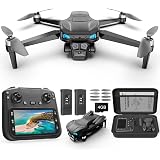
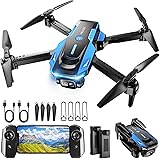
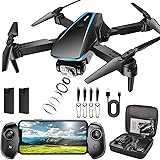
The remarkable evolution of Unmanned Aerial Vehicles (UAVs), commonly known as drones, has reshaped industries from logistics to entertainment, establishing them as indispensable tools in the modern technological landscape. These sophisticated machines represent a triumph of interdisciplinary engineering, seamlessly integrating advanced mechanics, intricate electronics, and intelligent algorithms to achieve precise, agile flight. While their operational simplicity from a user perspective often masks their underlying complexity, a deep dive into their design reveals a symphony of interconnected systems working in harmony.
As the accompanying video elucidates, the journey from rudimentary single-propeller designs to today’s highly stable quadcopters illustrates a continuous pursuit of control, efficiency, and maneuverability. This evolution has been driven by overcoming fundamental physics challenges, particularly Newton’s third law of motion, which mandates an equal and opposite reaction for every action. Understanding these core principles is crucial for anyone looking to truly grasp the capabilities and limitations of modern drone technology.
Deconstructing Drone Mechanics: Propeller Configurations and Flight Dynamics
The quest for stable and controlled flight in drones begins with their mechanical architecture, particularly the arrangement and operation of their propellers. Early, simplistic designs, such as a single-propeller drone, exemplify basic lift generation but suffer from a critical lack of directional control. Such a setup might provide vertical thrust, allowing the drone to ascend and descend, but it offers no inherent mechanism for horizontal movement or yaw, which is the rotation about the vertical axis. More significantly, the single propeller’s rotation induces an equal and opposite torque on the drone’s body, causing an undesirable, uncontrolled spin, a direct consequence of Newton’s third law.
Introducing a second propeller, as explored by innovative companies like ZeroZero Robotics, presents a more energy-efficient solution due to fewer moving parts. By rotating these two propellers in opposite directions, their reaction torques effectively cancel each other out, thereby mitigating the uncontrolled body spin. However, despite this advantage in torque cancellation and potential for extended flight times, achieving the high degree of stability and precision required for rapid maneuvers and sharp turns remains a significant challenge for dual-propeller systems. Advancements in control algorithms are continuously being sought to enhance their dynamic stability, potentially making them more viable for complex applications in the future. In stark contrast, three-propeller designs have largely proven impractical, introducing additional complications related to both reaction torque management and gyroscopic precession, which collectively add unnecessary complexity to both the mechanical design and the control algorithms.
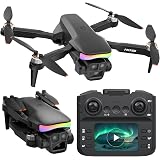
The four-propeller drone, or quadcopter, has emerged as the prevailing standard, offering a superior balance of stability, control, and efficiency. These designs typically feature an H-shape or X-shape frame, where the four propellers are strategically placed to allow for sophisticated flight maneuvers through differential thrust. Hovering is achieved when the total thrust generated by the propellers precisely counterbalances the drone’s weight. Forward motion, conversely, is orchestrated by subtly reducing the speed of the front propellers while simultaneously increasing the speed of the rear ones, inducing a pitch motion that tilts the drone forward. This tilt then generates a horizontal component of lift, propelling the drone in the desired direction.
Similarly, a drone’s roll movement is meticulously managed by creating an imbalance in lift between the left and right pairs of propellers. Increasing the thrust on one side while decreasing it on the other causes the drone to tilt, enabling lateral movement. The yaw motion in quadcopters, however, is ingeniously executed by exploiting reaction torques. Unlike the dual-propeller setup where torques are balanced, quadcopters deliberately spin one diagonal pair of propellers in the opposite direction to the other diagonal pair, ensuring inherent stability by canceling out net reaction torque during stable flight. To initiate a yaw, the flight controller slightly adjusts the speeds of these diagonal pairs, intentionally creating a net, unbalanced reaction torque, thereby causing the drone to rotate horizontally. This precise manipulation of propeller speeds allows quadcopters to perform highly agile and stable maneuvers, making them suitable for a vast array of industrial and recreational applications.
The Intelligent Core: Flight Controllers and Advanced Sensors
Beyond the mechanical ingenuity of propeller configurations, the true brilliance of modern drones resides in their sophisticated electronic systems, particularly the flight controller. Envisioned as the “brain” of the drone, this tiny yet powerful computer acts as an intelligent pilot, instantaneously processing vast amounts of data to maintain stable flight and execute complex commands. When a drone encounters external disturbances, such as an unexpected gust of wind, the flight controller must rapidly adjust the speed and direction of each propeller within milliseconds to prevent a crash. This level of real-time, precision control is far beyond human capability, transforming potentially disastrous scenarios into routine flight adjustments.
To perform its critical functions, the flight controller relies heavily on a diverse array of input signals from specialized sensors, ushering in the fascinating realm of drone sensor technology. Many of these sensors, thanks to advancements in MEMS (Micro-Electro-Mechanical Systems) technology, are incredibly compact, often no larger than an ant, yet possess extraordinary accuracy. MEMS devices are miniature machines with actual moving parts, fabricated on a micro-scale to detect physical phenomena with high fidelity. At the heart of a drone’s sensory system is the Inertial Measurement Unit (IMU), often considered the “king” of drone sensors. The IMU typically integrates three crucial components: accelerometers, gyroscopic sensors, and magnetometers.
- Accelerometers: These MEMS sensors detect changes in linear motion and orientation along three axes (X, Y, Z). They operate by measuring variations in capacitance between tiny, movable plates when subjected to acceleration. As the drone moves, the distance between these plates changes, altering their capacitance, which is then converted into electrical signals for the flight controller to interpret.
- Gyroscopic Sensors: Working in conjunction with accelerometers, gyroscopes measure the drone’s angular velocity, providing data on its rotation around its pitch, roll, and yaw axes. This information is vital for maintaining orientation and preventing unintended spins.
- Magnetometers: Functioning much like a compass, magnetometers detect the Earth’s magnetic field, providing the drone with its heading and absolute orientation relative to magnetic north. This data is critical for accurate navigation, especially when GPS signals are weak or unavailable.
In addition to the IMU, other vital sensors contribute to a drone’s operational awareness. A MEMS-based barometer sensor accurately measures atmospheric pressure, allowing the flight controller to determine the drone’s altitude with remarkable precision. However, the data collected by individual sensors can be susceptible to “noise” stemming from manufacturing defects, mechanical vibrations from propellers, or electromagnetic interference. To overcome these inaccuracies and enhance reliability, modern drones employ a sophisticated technique known as sensor fusion.
Sensor fusion involves combining data from multiple disparate sensors to produce a more robust and accurate estimate of the drone’s state. For instance, while a GPS sensor provides a basic altitude measurement, integrating this with barometer data and potentially even radar technology can dramatically improve the precision of altitude determination. By cross-referencing and filtering inputs from various sources, sensor fusion algorithms can effectively compensate for individual sensor weaknesses, providing the flight controller with a more consistent and trustworthy picture of the drone’s position, orientation, and velocity. This integrated approach is fundamental to achieving the stable and precise flight characteristics expected of high-performance UAVs.
Advanced Control Algorithms and Power Systems for Autonomous Flight
With a wealth of accurate sensor data at its disposal, the drone’s flight controller moves to its decision-making phase, governed by advanced control systems and intelligent algorithms. These algorithms are the true architects of autonomous flight, transforming raw sensor inputs into actionable commands that manipulate propeller speeds and maintain stability. One of the most prominent algorithms in this domain is the Kalman filter (KF). The Kalman filter is a powerful recursive algorithm that estimates the state of a system (in this case, the drone’s position, velocity, and orientation) by processing a series of noisy measurements observed over time. It dynamically predicts the drone’s future state based on its past and present data, then corrects these predictions using new sensor readings, effectively reducing error and providing a highly optimized estimate. This capability is indispensable for tasks such as GPS navigation, ensuring the drone can accurately follow a flight path, execute a return-to-home command, or, critically, stabilize itself against sudden environmental disturbances like strong winds.
The KF algorithm, embedded within the drone’s processor—a complex array of logic gates and transistors—translates these intelligent decisions into precise commands for the drone’s Brushless DC (BLDC) motors. BLDC motors are preferred in drone applications due to their high efficiency, power-to-weight ratio, and precise speed control capabilities. By intelligently adjusting the speeds of the four BLDC motors in a quadcopter, the flight controller can precisely control thrust, yaw, pitch, and roll, allowing the drone to navigate challenging environments with unparalleled stability. This level of algorithmic sophistication is a key differentiator in the consumer and commercial drone market, distinguishing leading manufacturers from their competitors. Companies like DJI, for example, attribute a significant portion of their market dominance to their highly refined flight control algorithms, which often include dual IMUs for enhanced reliability and vibration dampening systems to minimize sensor output errors.
Powering these intricate systems—the BLDC motors, electronic circuits, antennas, and sensors—is typically a high-capacity lithium-ion battery. These batteries are chosen for their excellent energy density, providing a compact yet powerful energy source necessary for extended flight times. Communication between the user and the drone relies on common radio frequency technology, which for consumer drones usually offers a communication range of one to two kilometers. However, an intriguing challenge arises if a drone inadvertently travels beyond this operational range, risking loss of control and disappearance. To address this, modern drones integrate sophisticated fail-safe mechanisms that leverage GPS and often tower-based internet technology.
When starting a flight, the operator typically sets a “home” location using GPS. Should the drone lose connection with its controller or travel out of range, its intelligent control system, often powered by the Kalman filter, automatically initiates a “return-to-home” sequence. The drone utilizes its stored GPS home coordinates to autonomously navigate back to the designated launch point, thereby preventing the loss of the expensive and complex aircraft. This fusion of advanced navigation, robust power systems, and clever communication protocols underscores the engineering prowess that defines the capabilities of contemporary drone technology.
Unmanned Answers: Your Drone Q&A
What is a drone?
Drones, also known as Unmanned Aerial Vehicles (UAVs), are sophisticated machines that combine mechanics, electronics, and intelligent algorithms for precise, agile flight. They are used in various industries, from logistics to entertainment.
How do drones fly and move?
Drones fly by using multiple propellers that generate lift. They move and steer by subtly adjusting the speed of individual propellers, which changes the drone’s tilt and direction.
What is the ‘brain’ of a drone?
The ‘brain’ of a drone is its flight controller, a tiny computer that acts as an intelligent pilot. It processes data instantly to maintain stable flight and execute commands, like adjusting propellers to counter wind.
What are some important sensors in a drone?
Drones use essential sensors like accelerometers, gyroscopes, and magnetometers, often combined in an Inertial Measurement Unit (IMU). These sensors detect the drone’s linear motion, rotation, and direction to help it stay oriented.
What happens if a drone flies too far away from its controller?
If a drone loses connection or goes out of range, many modern drones have a ‘return-to-home’ feature. The drone uses its stored GPS home coordinates to automatically fly back to its launch point, preventing it from getting lost.