The world of unmanned aerial vehicles (UAVs), commonly known as drones, offers diverse solutions for a myriad of applications. As explored in the accompanying video, selecting the appropriate drone platform, specifically distinguishing between a fixed-wing or multi-rotor drone, becomes a crucial decision for professionals and enthusiasts alike. This choice directly influences operational capabilities, efficiency, and the success of various missions, ranging from intricate inspections to expansive aerial mapping projects. Each drone type, with its inherent design and operational characteristics, is optimally suited for different tasks and environmental conditions, thereby necessitating careful consideration before investment.
Understanding Multi-Rotor Drones for Versatile Operations
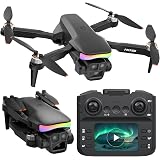
Multi-rotor drones, often the mental image conjured when discussing drones, are characterized by multiple propellers offering vertical lift and exceptional maneuverability. These platforms are available in several configurations, each providing distinct operational advantages. Quadcopters, which feature four rotors, are widely recognized for their balance of stability and agility, making them popular for general use. Hexacopters, equipped with six rotors, offer enhanced stability and redundancy, which is beneficial for carrying heavier payloads or maintaining flight should one motor fail. Meanwhile, coaxial multi-rotor configurations, such as those with eight motors stacked in pairs, can provide even greater lift and stability, often used in more demanding commercial applications requiring significant payload capacity.
One primary advantage of multi-rotor drones is their remarkable stability, particularly in challenging wind conditions. This inherent stability allows for precise control, which is essential for operations requiring meticulous positioning. Another significant benefit is their ability to perform vertical takeoffs and landings (VTOL) from small, confined spaces. This feature eliminates the need for runways, making them highly adaptable for deployment in various terrains and urban environments. Such ease of deployment significantly reduces preparation time, allowing for rapid operational starts.
Multi-rotors also excel in tasks demanding close proximity to subjects. For instance, detailed infrastructure inspections, such as examining the underside of bridges, navigating close to power lines, or inspecting communication towers, are perfectly suited for these drones. Their ability to hover accurately and precisely maneuver in tight spaces ensures comprehensive data collection without compromising safety. Furthermore, many multi-rotor systems, like those offered by companies such as DJI, are known for their user-friendly interfaces and advanced autonomous features, including automated take-off, precise hovering capabilities, and reliable Return to Home functions, which simplify operation and enhance safety protocols for pilots.
Advantages of Multi-Rotor Drone Technology
Several key advantages are frequently cited when discussing the operational benefits of multi-rotor drones. Firstly, their superior stability, even when confronted with high winds, allows for consistent and reliable flight performance. Secondly, the capability to hover in place provides unprecedented precision, which is critical for capturing high-resolution imagery and data from specific points of interest. Thirdly, multi-rotor systems are generally characterized by their ease of assembly and intuitive flight controls, thus lowering the barrier to entry for new operators. This accessibility contributes to faster deployment times, minimizing the period between site arrival and data acquisition.
Moreover, the ability of multi-rotor drones to approach objectives closely ensures the collection of highly detailed information. This characteristic is invaluable for close-up inspections where minute details are paramount for analysis and decision-making. The inherent design of these drones, which relies on all motors generating thrust for lift, contributes to their stability but typically results in shorter flight durations compared to fixed-wing aircraft. Most commercial multi-rotors usually achieve flight times ranging from 30 to 50 minutes, depending on their configuration, payload, and battery technology. This necessitates careful mission planning, often requiring multiple batteries or strategic landing zones for extended operations.
Exploring Fixed-Wing and VTOL Drones for Extended Missions
Fixed-wing drones represent an entirely different approach to aerial operations, resembling traditional airplanes in their fundamental design. These drones generate lift through their wings as they move forward through the air, requiring continuous forward motion to remain airborne. This design principle inherently allows for significantly longer flight times and much greater area coverage compared to multi-rotor systems. However, traditional fixed-wing drones typically require a designated launch area, such as a runway, and a landing zone, which can sometimes limit their operational flexibility in remote or constrained environments.
A revolutionary development in fixed-wing technology is the advent of Vertical Takeoff and Landing (VTOL) fixed-wing drones. VTOL drones ingeniously combine the best attributes of both multi-rotors and fixed-wings. They are equipped with multi-rotor motors that enable them to take off and land vertically, just like a multi-rotor drone, eliminating the need for extensive runways. Once airborne and clear of obstacles, these drones transition into horizontal flight, activating their main propulsion system and relying on their wings for aerodynamic lift. This allows them to benefit from the extended flight times and greater range characteristic of fixed-wing aircraft.
The operational sequence of a VTOL fixed-wing drone, exemplified by models like the Dragonfish, involves a vertical ascent using its multi-rotor capabilities. Upon reaching a safe altitude, the drone seamlessly transitions to forward flight, where its wings provide the primary lift, drastically reducing the power required from its motors. When the mission is complete, the drone returns to a designated landing area, transitions back into multi-rotor mode, hovers, and then lands vertically in a small footprint, often as compact as a 40-foot by 40-foot area. This hybrid capability makes VTOL fixed-wing drones exceptionally versatile, capable of deploying from confined spaces while covering vast geographical areas efficiently.
Key Advantages of Fixed-Wing and VTOL Drone Systems
The primary advantage of VTOL fixed-wing drones lies in their remarkable efficiency for large-scale operations. Firstly, the vertical takeoff and landing capability from minimal ground space greatly enhances operational flexibility, allowing deployment in areas inaccessible to conventional fixed-wing aircraft. Secondly, once in fixed-wing mode, these drones leverage aerodynamic lift, meaning their motors work less strenuously to maintain altitude. This reduced power consumption translates directly into considerably longer flight durations, often extending into several hours, which is a substantial increase over multi-rotor drones. Thirdly, the speed and efficiency of fixed-wing flight enable these drones to cover significantly more ground in a single mission. It is generally understood that a fixed-wing drone can survey three to four times the area that a multi-rotor drone can cover within the same timeframe, making them ideal for expansive mapping and surveying tasks. The ability to cover more area allows for comprehensive data acquisition over large tracts of land, reducing the number of flights required and ultimately decreasing operational costs and time.
Comparative Analysis: Multi-Rotor vs. Fixed-Wing for Specific Applications
When considering the application of drones for mapping, the differences between multi-rotor and fixed-wing platforms become particularly evident. Multi-rotor drones, with their ability to fly slower and at lower altitudes, are often preferred for detailed mapping projects that require high-resolution imagery of specific, localized areas. This includes urban planning, construction site monitoring, or detailed topographical surveys where precise data on intricate features is essential. The slower flight speed allows sensors to capture more overlapping images, resulting in higher quality photogrammetric models and point clouds. Data resolution can often be optimized by adjusting flight parameters and sensor configurations, leading to exceptionally accurate results for small to medium-scale projects.
Conversely, fixed-wing and VTOL drones are the superior choice for large-scale mapping and surveying operations. Their capacity to fly faster and cover vast distances makes them indispensable for agricultural land management, large infrastructure projects, environmental monitoring, and large-area cadastral mapping. While they typically fly at higher altitudes and speeds, modern sensor technology and sophisticated flight planning software ensure that the collected data still meets high standards for accuracy. The primary trade-off is often between the intricate detail achievable by slower multi-rotors and the sheer coverage area offered by fixed-wings. For extensive land parcels, a fixed-wing drone can complete a survey that would require multiple, time-consuming flights from a multi-rotor, thereby optimizing project timelines and resource allocation.
Beyond mapping, the choice between fixed-wing or multi-rotor drones extends to various other professional applications. For instance, immediate emergency response or urban surveillance might favor multi-rotors due to their quick deployment and ability to navigate complex airspace. Long-range pipeline inspections or wildlife monitoring across large reserves would strongly benefit from the endurance of fixed-wing platforms. The nature of the payload—whether it’s a high-resolution camera, a LiDAR sensor, a multispectral camera for agriculture, or even delivery cargo—also influences the selection. Multi-rotors generally offer more flexibility in terms of payload integration and swift sensor swaps for different tasks, whereas fixed-wings are optimized for sustained flight with a specific, typically heavier, payload configuration.
Safety and Operational Considerations for All Drone Platforms
Regardless of whether a fixed-wing or multi-rotor drone is chosen, robust safety protocols and diligent operational planning are paramount. All drone operators are inherently responsible for ensuring flight safety and adherence to regulatory guidelines. Before any flight, a thorough assessment of environmental factors, including wind speeds and weather conditions, should be meticulously performed. Although many modern drones, both multi-rotor and fixed-wing, feature advanced built-in safety mechanisms, such as airspeed detectors and obstacle avoidance systems, pilot vigilance remains the ultimate safeguard. These intelligent systems are designed to assist, but they do not replace comprehensive pre-flight checks and real-time decision-making by a skilled operator.
Pre-flight checks involve not only verifying the physical integrity of the drone but also ensuring all internal systems are functioning correctly. Many advanced drones conduct self-diagnostic checks, alerting operators to potential issues before takeoff. Furthermore, sophisticated flight planning software allows for the establishment of safe Return to Home (RTH) parameters, which can be configured to avoid obstacles in a specific area if communication is lost or battery levels become critically low. This capability significantly mitigates risks associated with unexpected events during flight. Understanding local airspace regulations and obtaining any necessary permits or waivers are also non-negotiable aspects of responsible drone operation. Adherence to these practices ensures that drone operations are conducted safely, efficiently, and in full compliance with legal requirements, protecting both the equipment and the surrounding environment.
Post-Flight Debrief: Your Drone Choice Q&A
What is a multi-rotor drone?
Multi-rotor drones use multiple propellers for vertical lift and are known for their exceptional maneuverability and stability, making them ideal for precise operations.
What is a fixed-wing drone?
Fixed-wing drones resemble traditional airplanes, generating lift from their wings as they move forward. They are designed for much longer flight times and covering larger areas.
What is a VTOL fixed-wing drone?
A VTOL (Vertical Takeoff and Landing) fixed-wing drone combines both types, using multi-rotor motors to take off and land vertically, then flying like a fixed-wing drone for extended missions.
When should I choose a multi-rotor drone?
Multi-rotor drones are best for tasks requiring precise hovering, close-up inspections, and operations in confined spaces due to their superior stability and maneuverability.
When should I choose a fixed-wing or VTOL drone?
Fixed-wing and VTOL drones are ideal for large-scale operations like extensive mapping, surveying vast areas, and long-range monitoring because of their extended flight times and efficient coverage.