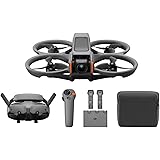
The exhilarating world of First Person View (FPV) drones offers an unparalleled sense of freedom and immersion, captivating pilots worldwide. Recent industry reports suggest a significant rise in FPV drone enthusiasts, drawn by the unique blend of manual control, high speed, and acrobatic capabilities. For those intrigued by the aerial ballet often seen in online videos or seeking to capture dynamic cinematic shots, understanding the intricate components of an FPV drone is the critical first step. This detailed guide complements the informational video above, diving deeper into each essential part that makes these remarkable machines fly, enabling you to build or troubleshoot with confidence.
Understanding FPV Drones: A First Person Perspective
Unlike standard camera drones such as the DJI Mavic or Phantom series, FPV drones are designed for a truly immersive flight experience. These specialized quadcopters transmit live video from an onboard camera directly to goggles worn by the pilot, creating a cockpit-like perspective. This direct feed allows for precise, manual control, empowering pilots to execute complex maneuvers that are simply not possible with automated GPS-stabilized drones. Imagine feeling every turn and dive as if you were soaring through the air yourself, navigating tight spaces or performing breathtaking aerial stunts.
The core difference lies in their flight philosophy; FPV drones demand constant, direct input from the pilot, offering unrivaled agility and raw speed. This hands-on approach cultivates a deeper connection between pilot and machine, transforming flight into an engaging and dynamic art form. Mastering FPV requires dedication, but the rewards—from competitive racing to fluid cinematic sequences—are profoundly satisfying. Let’s explore the individual components that make these incredible FPV drones possible.
1. The Foundation: FPV Drone Frames
The frame serves as the skeleton of your FPV drone, housing all the electronic components and determining the drone’s overall size and durability. As highlighted in the video, frames come in diverse configurations, each optimized for specific flight styles and propeller sizes. For example, a 5-inch freestyle frame crafted from resilient carbon fiber is ideal for aggressive acrobatic flying in open spaces, offering robust protection against impacts.
Conversely, smaller drones designed for indoor use, often referred to as “whoops” or “toothpicks,” typically utilize lighter plastic frames to minimize weight and prevent damage during crashes. Frame dimensions are often measured by the largest propeller size they can accommodate, such as a 5-inch frame supporting 5-inch props. Another critical measurement is the motor-to-motor distance diagonally across the frame, which further dictates stability and maneuverability.
Most frames feature standardized mounting holes for electronic components, commonly 30x30mm or 20x20mm for larger builds, and 26x26mm for more compact designs. Selecting a frame also involves considering various geometries like X-frames, stretched X-frames, or H-frames, each offering unique flight characteristics such as stability, responsiveness, or cinematic suitability. Understanding these frame variations ensures optimal component compatibility and desired flight performance.
2. The Brain: The Flight Controller (FC)
Often regarded as the central nervous system of an FPV drone, the flight controller processes all pilot commands and sensor data to maintain stable and responsive flight. Located typically at the heart of the drone, this sophisticated board integrates an array of sensors, including gyroscopes and accelerometers, which continuously monitor the drone’s orientation and movement. These sensors feed data to a powerful microprocessor, such as an F4 or F7 chip, which then executes complex algorithms to adjust motor speeds.
The flight controller acts as a hub, with virtually every other electronic component — from ESCs to receivers — connecting back to it. Configuration of the FC is performed via a computer, where pilots can fine-tune flight parameters, assign switch functions, and customize various settings to match their flying style. The choice between an F4 and an F7 processor significantly impacts performance; F7 processors boast higher clock speeds and more processing power, offering faster loop times and supporting advanced features, thus providing a smoother and more responsive flight experience.
Furthermore, flight controllers are available as standalone units or integrated within all-in-one (AIO) boards, which combine the FC with other components like electronic speed controllers (ESCs) or video transmitters (VTX). While AIO boards simplify wiring and reduce weight, a modular setup with separate components can offer easier repairability if one part fails. The mounting pattern of the FC, like 30x30mm or 20x20mm, must precisely align with the chosen frame to ensure a secure and stable installation.
3. Powering the Motors: Electronic Speed Controllers (ESCs)
Electronic Speed Controllers (ESCs) are vital intermediaries, translating the flight controller’s signals into precise rotational commands for each motor. Each ESC controls one motor, dictating its speed and direction based on input from the FC. In multirotor FPV drones, ESCs commonly come in two primary configurations: as individual units mounted on each arm, or as a single 4-in-1 board that neatly combines four ESCs onto one compact PCB.
Individual ESCs, though requiring more wiring and space, offer cost-effective replacement should a single unit fail, often seen in “basher” builds where durability and easy repairs are prioritized. Conversely, 4-in-1 ESCs provide a much cleaner and more compact build, reducing wiring clutter and saving precious space within the frame. However, if one ESC on a 4-in-1 board malfunctions, the entire unit typically needs replacement, which can be more expensive.
Modern ESCs utilize 32-bit microprocessors running firmware like BLHeli32 or KISS, offering significant advantages over older 8-bit BLHeli_S counterparts. These advanced firmwares enable features such as Turtle Mode (allowing the drone to flip itself over after a crash), precise throttle resolution, and comprehensive telemetry feedback. Crucially, selecting an ESC requires careful attention to its voltage rating (e.g., 2-4S or 6S) to match your chosen battery, as plugging in an incompatible higher-voltage battery can instantly fry the component.
4. The Thrust Generators: FPV Drone Motors
Motors are the powerhouse of your FPV drone, converting electrical energy into the mechanical thrust needed for flight. Almost all modern FPV drones utilize brushless motors due to their superior efficiency, power, and durability compared to brushed motors, which are typically found only in tiny micro-drones. Brushless motors can spin in either direction, offering greater flexibility for prop configuration and advanced flight capabilities.
A key characteristic of FPV drone motors is their KV rating, which signifies the motor’s revolutions per minute (RPM) per volt, with no load. Lower KV motors (e.g., 1700 KV) are generally larger, designed to spin bigger propellers with more torque, making them suitable for cinematic or long-range FPV drones that prioritize smooth flight and efficiency. Conversely, higher KV motors (e.g., 19,000 KV for micro drones) are smaller, generate higher RPMs, and are ideal for agile racing or freestyle builds that demand rapid acceleration and responsiveness with smaller propellers.
Motor sizing conventions, such as 2207 or 2306, further denote their dimensions, with the first two digits representing the stator diameter and the last two indicating the stator height. The mounting pattern, often 16x16mm for 5-inch racing drones, must align with your frame. Imagine balancing the desire for raw speed against the need for extended flight times; your motor choice, alongside battery voltage and propeller size, will be central to achieving your desired performance envelope for your FPV drone.
5. The Aerodynamic Blades: Propellers
Propellers are the direct force generators, converting the motor’s rotational energy into thrust, making them indispensable for FPV drone flight. As noted, propellers are measured by their diameter, ensuring they match the drone frame’s capabilities, such as a 5-inch prop for a 5-inch frame. Beyond diameter, propellers are characterized by their pitch and the number of blades, each factor significantly influencing flight characteristics.
Pitch refers to the theoretical distance a propeller would advance in one revolution, and a higher pitch generally means more speed but less thrust at lower RPMs. Propellers come in various blade counts, commonly bi-blade, tri-blade, quad-blade, or even more, with each configuration offering distinct performance profiles. For instance, tri-blade propellers often provide excellent “grip” in the air, offering a balance of thrust and control favored by freestyle pilots for their responsive feel.
Bi-blade propellers, on the other hand, are typically more efficient, making them a preferred choice for long-range FPV drones or cruising builds where maximizing flight time is crucial. The material of the propeller, usually polycarbonate or a carbon composite, also impacts durability and stiffness. Experimenting with different propeller types is a common practice among FPV pilots to fine-tune their drone’s performance for specific tasks, from aggressive racing to smooth cinematic capture.
6. The Eyes of the Drone: FPV Camera Systems
The FPV camera system is paramount, providing the live video feed that enables the pilot’s first-person view. This system typically consists of an FPV camera and a Video Transmitter (VTX), though some setups integrate both. The video highlights a crucial distinction between analog and digital FPV systems, each with its own set of advantages and considerations for FPV drones.
Analog VTXs and cameras are generally more affordable, smaller, and boast extremely low latency, making them highly responsive for fast-paced flying. However, their video resolution is lower, often accompanied by static or interference, creating a characteristic “fuzzy” image. A key advantage of analog VTXs is the “Smart Audio” feature, which allows pilots to remotely adjust VTX settings and even some flight controller parameters directly through their FPV goggles’ On-Screen Display (OSD) menu, enhancing convenience during field adjustments.
Digital FPV systems, such as the DJI FPV System or Caddx Vista, offer vastly superior video resolution, delivering a crisp, high-definition image that greatly enhances situational awareness and visual fidelity. While digital systems introduce a minimal amount of latency compared to analog, the trade-off is often justified by the stunning video quality, albeit at a higher price point. Cameras also come in various form factors—full-size (28mm), mini (21mm), and micro (19mm)—to fit diverse frame designs, with smaller cameras being ideal for compact FPV drones. Proper powering, preferably directly from the VTX or a regulated 5V output from the FC, is essential to protect the camera from voltage spikes and ensure a clean video signal.
7. The Control Link: Receivers
The receiver is a crucial communication component, serving as the wireless bridge between your handheld radio controller and the flight controller of your FPV drone. Its primary function is to interpret the signals sent by the pilot and relay them to the FC, which then translates these commands into flight maneuvers. The choice of receiver is dictated by your radio controller’s brand and protocol, as well as your desired flight range and signal reliability.
In the US, 2.4 GHz and 900 MHz are the two largely adopted frequency bands for FPV control. 2.4 GHz systems, like FrSky’s popular XM+ or ExpressLRS (ELRS) in this band, are widely used for close-to-mid-range flying, offering excellent responsiveness for freestyle and racing FPV drones. For pilots venturing into long-range FPV flights, 900 MHz systems, such as Crossfire (CRSF) or ELRS at 900 MHz, provide superior penetration through obstacles and extended reach, minimizing the risk of signal loss over vast distances.
Receivers utilize various communication protocols like S.Bus, F.Port, Crossfire, or ELRS, which determine how they connect and interact with the flight controller. Configuring the FC to recognize the specific protocol of your receiver is a necessary step during the build process. Imagine the frustration of losing control mid-flight; selecting a robust, compatible receiver system and ensuring a strong, reliable link is paramount for safety and enjoyable FPV flying.
8. Beyond the Essentials: Additional FPV Drone Components
While the core components form the heart of an FPV drone, several supplementary parts significantly enhance its functionality, durability, and pilot experience. Incorporating these can elevate a basic build to a sophisticated and user-friendly flying machine.
1. **Batteries:** The power source for any FPV drone is almost exclusively a Lithium Polymer (LiPo) battery. These come in various cell counts (e.g., 2S, 4S, 6S), capacities (mAh), and C-ratings (indicating discharge rate). Selecting the correct battery is crucial for performance and component longevity, ensuring it matches the voltage requirements of your motors, ESCs, and FC. Higher cell counts provide more power and speed, while greater capacity extends flight time.
2. **3D Printed Parts:** The FPV community heavily leverages 3D printing for customization and protection. From robust GoPro mounts that secure action cameras for cinematic footage to durable arm bumpers and antenna mounts, 3D printed parts offer a lightweight and customizable solution for myriad needs. Platforms like Thingiverse host thousands of designs, allowing pilots to personalize their FPV drones, improve durability, and even facilitate unique modifications.
3. **LEDs:** While largely aesthetic, LEDs can also serve practical purposes. Many flight controllers offer dedicated pads for addressable LEDs, allowing pilots to program custom color patterns and strobe effects. These can improve visibility for night flying, help with orientation during daylight, or simply add a personalized flair to the FPV drone.
4. **Beeper:** This small but mighty accessory is an absolute lifesaver for locating a downed FPV drone. In the event of a crash in tall grass or dense foliage, a loud beeper can be activated remotely via the radio controller or automatically upon signal loss, guiding the pilot to their lost quad. Some beepers are self-powered, ensuring they continue to function even if the main battery is disconnected.
5. **GPS Module:** Primarily used for long-range FPV drones, a GPS module adds a critical layer of safety and functionality. It provides precise location data, which can be displayed on the FPV goggles’ OSD, offering information like speed, altitude, and distance from home. Crucially, in a failsafe scenario (loss of control link), a GPS-equipped drone can execute a “Return to Home” function, autonomously flying back to its launch point, significantly increasing the chances of recovery in remote areas.
6. **Battery Straps:** Seemingly simple, battery straps are essential for securely fastening the LiPo battery to the FPV drone frame. High-quality straps often feature a grippy, rubberized surface to prevent the battery from shifting during aggressive maneuvers or crashes. These come in various lengths and widths to accommodate different battery sizes and frame designs, ensuring the power source remains firmly in place throughout flight.
Unveiling FPV Drones: Your Questions Answered
What is an FPV drone?
FPV (First Person View) drones provide an immersive flying experience by transmitting live video from an onboard camera directly to goggles worn by the pilot. This allows for precise manual control and acrobatic maneuvers as if you were in the cockpit.
How are FPV drones different from standard camera drones like a DJI Mavic?
Unlike standard camera drones that often use GPS stabilization and screen viewing, FPV drones offer a direct, immersive view through goggles and demand constant, direct manual input from the pilot. This allows for unparalleled agility and complex maneuvers not possible with automated drones.
What are the main components that make an FPV drone fly?
The essential components include a frame (the drone’s skeleton), a flight controller (the brain), Electronic Speed Controllers (ESCs) to power motors, brushless motors for thrust, propellers for lift, an FPV camera system for video, and a receiver for pilot commands.
What does the Flight Controller (FC) do in an FPV drone?
The Flight Controller is the central nervous system, processing all pilot commands and sensor data (like gyroscopes) to maintain stable and responsive flight. It continuously adjusts motor speeds to control the drone’s orientation and movement.
How do I see what my FPV drone sees when I’m flying it?
You see what your FPV drone sees through its FPV camera system, which includes an FPV camera and a Video Transmitter (VTX). This system sends a live video feed directly to special goggles that the pilot wears.