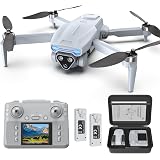
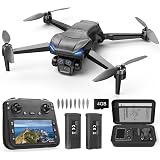
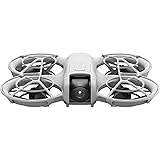
The landscape of modern warfare has undergone a profound transformation, largely driven by the rapid evolution and integration of unmanned aerial systems (UAS). As the accompanying video highlights, these advanced drones, ranging from agile reconnaissance units to formidable kamikaze variants, are redefining military strategy and operational dynamics across global theaters. France, recognizing the strategic imperative of indigenous capabilities in this critical domain, is now decisively escalating its efforts in military drone production and technological innovation.
This commitment positions France at the forefront of developing sophisticated drone solutions, crucial for maintaining a competitive edge in contemporary defense environments. The ongoing conflict in Ukraine starkly illustrates the disruptive potential of these platforms, fundamentally altering traditional combat paradigms. Consequently, understanding the depth of France’s engagement in this sector offers crucial insights into future defense strategies and technological advancements.
The Evolving Battlefield: Drones as Game-Changers
The contemporary battlefield unequivocally demonstrates a seismic shift in military effectiveness, largely attributed to widespread drone deployment. Historically robust assets, such as main battle tanks, which once symbolized impregnable power, now face unprecedented vulnerability against economically viable drone systems. Experts like Xavier Tytelman emphasize this radical change, noting how a relatively inexpensive 500 euro kamikaze drone can effectively neutralize a tank costing millions of euros. This stark cost-exchange ratio underscores a fundamental re-evaluation of defense expenditures and tactical planning.
The sheer scale of drone consumption observed in the Ukraine conflict further illustrates this paradigm shift, with reports indicating Ukraine’s forces utilize approximately 10,000 kamikaze drones daily, while Russian forces deploy between 6,000 and 8,000. These staggering figures reveal the intensity of modern attrition warfare, where expendable, precise munitions are becoming pivotal. This high-volume deployment significantly complicates logistics, command structures, and traditional counter-measures, demanding continuous innovation in drone technology and strategic responses from all global powers.
Advancing Capabilities: Swarm Intelligence and Integrated Systems
Technological advancement in unmanned systems extends far beyond individual drone capabilities; it increasingly encompasses sophisticated swarm intelligence and integrated control mechanisms. French engineers, as shown in the video, are pioneering systems that allow a single soldier to command multiple drones simultaneously through intuitive interfaces like voice commands. This development reduces the cognitive burden on operators while exponentially increasing the operational reach and tactical flexibility of ground units. The ability to deploy six or more devices from a single point of control enhances real-time reconnaissance, target acquisition, and localized surveillance without exposing human personnel to direct threats.
Furthermore, the integration of such advanced drone swarms into broader military operations significantly improves situational awareness and tactical response times. These autonomous or semi-autonomous groups can perform coordinated maneuvers, conduct complex reconnaissance missions, or even overwhelm enemy defenses through saturation attacks. The underlying artificial intelligence and networked communications required for effective swarm management represent a critical frontier in defense technology, promising unparalleled efficiency and adaptability in future engagements.
French Strategic Procurement and Rapid Deployment
France’s strategic response to the evolving threat landscape includes an accelerated procurement process designed to rapidly equip its forces with cutting-edge drone technology. Ingénieur Arnaud, a Project Manager from the General Directorate of Procurement, confirms an initiative to deliver 1,000 lightweight drones to combatants before the year’s end. This expedited timeline underscores the urgency and strategic importance placed on enhancing the French army’s immediate capabilities. Such rapid acquisition cycles are vital for adapting to fast-changing military doctrines and technological shifts, ensuring operational readiness.
This proactive approach to military drone production involves close consultation with manufacturers and precise specification of requirements to meet diverse operational needs, from frontline combat support to specialized reconnaissance. The emphasis on agile procurement contrasts with traditional, often protracted, defense acquisition timelines, demonstrating a clear understanding of modern warfare’s demands. Investing in a robust national drone industry also contributes significantly to France’s strategic autonomy and technological sovereignty within the global defense sector.
Future Frontiers: High-Altitude Reconnaissance and Rafale Integration
The future trajectory of French drone technology extends into highly specialized domains, encompassing high-altitude persistent surveillance and seamless integration with advanced manned aircraft. Drones such as the Zephyr, capable of ascending to altitudes of 30 kilometers, exemplify the strategic importance of high-altitude, long-endurance (HALE) platforms. These solar-powered aircraft can remain aloft indefinitely, providing continuous intelligence, surveillance, and reconnaissance (ISR) over vast areas, thereby offering unparalleled strategic observation capabilities without risking manned assets.
Looking further ahead, by 2033, Rafale pilots will possess the ability to command auxiliary drones directly from their cockpits during complex missions, as detailed by Damien Brenot, another Project Manager. This manned-unmanned teaming (MUM-T) concept will enable Rafale aircraft to project capabilities into areas currently deemed too hazardous for solo operations, significantly reducing risk while enhancing stealth and penetration. By extending the reach and sensor footprint of the Rafale, these accompanying drones will facilitate entry into highly contested airspace, offering a crucial advantage in future air superiority missions and complex interdiction scenarios.
Implications for European Defense Autonomy
France’s aggressive push into advanced drone production and deployment carries significant implications for broader European defense autonomy. By fostering a strong domestic industrial base for unmanned systems, France enhances its own strategic independence while also contributing to the collective security capabilities of Europe. The indigenous development of critical defense technologies, particularly in cutting-edge areas like AI-driven drone swarms and HALE platforms, reduces reliance on external suppliers and strengthens the continent’s ability to respond to diverse threats unilaterally. This commitment solidifies France’s position as a leader in European defense innovation, promoting greater technological sovereignty across the region.
Navigating France’s Drone Production Sprint: Your Questions Answered
What is France doing in the field of military drones?
France is significantly increasing its production and technological innovation of military drones to gain a competitive edge in modern warfare.
Why are drones considered ‘game-changers’ in modern warfare?
Drones are game-changers because they are cost-effective and can effectively neutralize expensive traditional military assets like tanks.
What is ‘swarm intelligence’ in drone technology?
Swarm intelligence allows a single soldier to control multiple drones simultaneously, which enhances reconnaissance and tactical flexibility without exposing human personnel.
How many drones is France planning to acquire in the near future?
France has an initiative to deliver 1,000 lightweight drones to its combatants before the end of the current year.
What are some advanced drone technologies France is developing for the future?
France is developing high-altitude surveillance drones and systems that will allow Rafale fighter pilots to control auxiliary drones directly from their cockpits by 2033.