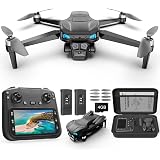
The innovation witnessed in the accompanying video, showcasing the intricate process of building a carbon fiber plane, specifically a VTOL fixed-wing drone, underscores a pivotal shift in modern aerospace manufacturing. Crafting these sophisticated unmanned aerial vehicles demands a profound understanding of advanced composite materials and intricate aerodynamic principles. This detailed overview delves into the engineering complexities and strategic advantages inherent in constructing such an advanced piece of aerial technology, moving beyond mere visual observation to explore the underlying science and methodologies.
The Imperative of Carbon Fiber in Advanced Drone Construction
In the realm of high-performance aerial platforms, material selection dictates mission capability and operational longevity. Carbon fiber, with its unparalleled strength-to-weight ratio, emerges as the preeminent choice for building a robust and efficient VTOL fixed-wing drone. Imagine a material possessing the tensile strength of steel but only a fraction of its mass; this is the fundamental advantage carbon fiber offers to aerospace engineers.
Traditionally, aircraft construction relied on metallic alloys like aluminum, which provided a good balance of strength and ductility. However, these metals carry significant weight penalties, limiting payload capacity and endurance. By contrast, advanced composite materials such as carbon fiber-reinforced polymer (CFRP) allow for radical weight reduction without compromising structural integrity, a critical factor for vertical take-off and landing (VTOL) systems where power-to-weight ratio is paramount.
Advantages Driving Carbon Fiber Adoption in VTOL Fixed-Wing Drones
- **Exceptional Strength-to-Weight Ratio:** This characteristic is perhaps carbon fiber’s most significant benefit, enabling lighter airframes that can carry heavier payloads or fly for longer durations.
- **High Stiffness and Durability:** Carbon fiber exhibits superior stiffness, resisting deformation under load, which is crucial for maintaining aerodynamic profiles during flight and surviving harsh operational conditions.
- **Corrosion Resistance:** Unlike metals, CFRP does not corrode, which simplifies maintenance and extends the operational lifespan, especially in diverse environmental settings.
- **Fatigue Resistance:** Carbon fiber composites demonstrate excellent fatigue resistance, enduring repeated stress cycles far better than many metallic components, thereby enhancing reliability over time.
- **Design Flexibility:** The anisotropic nature of carbon fiber allows engineers to tailor material properties by orienting fibers in specific directions, optimizing strength where loads are highest and minimizing weight elsewhere.
Design Principles for VTOL Fixed-Wing Drone Construction
The design of a VTOL fixed-wing drone represents a fascinating convergence of helicopter and airplane aerodynamics, presenting unique challenges and opportunities. Achieving seamless transitions between vertical lift and forward flight demands meticulous engineering across multiple disciplines. Considerations extend far beyond simply combining two distinct flight modes into one airframe structure.
Aerodynamic efficiency is crucial for the fixed-wing flight phase, while thrust vectoring and stability are vital for vertical maneuvers. For instance, the wing design must provide sufficient lift for efficient cruise, yet it cannot impede the vertical thrust mechanisms during takeoff and landing. This dual requirement often leads to innovative configurations such as tilt-rotor, tilt-wing, or quadplane designs, each with its own set of structural implications.
Integrated Aerodynamic and Structural Design
Developing a successful carbon fiber VTOL fixed-wing drone necessitates a holistic design approach. Computational Fluid Dynamics (CFD) simulations are extensively employed to optimize aerodynamic performance for both flight regimes. Simultaneously, Finite Element Analysis (FEA) models are utilized to predict structural responses, ensuring that the carbon fiber components can withstand dynamic loads during transitions and extreme flight conditions.
The structural layout must accommodate both the fixed-wing elements and the vertical lift rotors, often requiring localized reinforcement in areas experiencing high stress concentrations. Moreover, the integration of propulsion systems, flight control electronics, and payload bays must be considered from the outset, ensuring a compact and balanced final assembly. Compromises between performance metrics are frequently evaluated during this iterative design phase.
Advanced Manufacturing Processes for Carbon Fiber Components
The manufacturing process for carbon fiber components is a sophisticated art form, demanding precision and specialized equipment to realize the full potential of this advanced material. Unlike traditional metal fabrication, composite manufacturing often involves hand layup, automated fiber placement, and precise curing cycles. Each step in this elaborate dance contributes significantly to the final properties of the structure.
High-quality carbon fiber prepregs, which are fibers pre-impregnated with a thermosetting resin, are meticulously cut and layered into molds. The orientation of each ply is critical, determining the directional strength and stiffness of the resultant part. This methodical layering process is akin to building a digital image pixel by pixel, where each layer contributes to the overall strength and shape.
Key Fabrication Techniques in Carbon Fiber Plane Building
- **Hand Layup and Vacuum Bagging:** This method involves manually placing prepreg plies into a mold, followed by vacuum bagging to remove air and compact the laminate. It is a labor-intensive but highly versatile technique often used for complex geometries and prototyping.
- **Automated Fiber Placement (AFP) / Automated Tape Laying (ATL):** For larger, more geometrically consistent components, AFP machines precisely lay carbon fiber tapes or tows onto a mold surface. This computer-controlled process ensures high consistency, reduces waste, and significantly accelerates production rates.
- **Autoclave Curing:** Once the carbon fiber plies are arranged, the entire assembly is transferred to an autoclave, a pressure vessel where it is subjected to carefully controlled temperature and pressure cycles. This process polymerizes the resin, bonding the fibers into a rigid, monolithic structure, much like baking a cake to achieve its final firm consistency.
- **Resin Infusion and Light RTM:** These techniques involve laying dry carbon fiber fabrics into a mold, then infusing liquid resin through the dry fibers under vacuum or pressure. They offer cost-effective alternatives for specific applications, particularly when component size or complexity limits traditional prepreg processes.
Integrating VTOL Mechanisms and Subsystems
The successful operation of a VTOL fixed-wing drone hinges on the seamless integration of its vertical take-off and landing mechanisms. This involves not only the physical attachment of motors and propellers but also the sophisticated synchronization of flight control systems. The drone transitions gracefully between hovering, like a hummingbird, and soaring forward like an eagle, demanding perfectly coordinated actions from its various subsystems.
Quadplane configurations, for instance, utilize dedicated vertical lift motors along with a standard fixed-wing propeller, requiring robust motor mounts and integrated wiring harnesses. Tilt-rotor designs, on the other hand, necessitate complex gimbal mechanisms and powerful actuators to pivot the entire propulsion unit, transitioning thrust from vertical to horizontal planes. Each design choice presents its own set of engineering challenges.
Structural Reinforcement and Load Path Management
Given the high dynamic loads exerted during VTOL operations, particularly during transitions and sudden maneuvers, careful attention must be paid to structural reinforcement. The areas where vertical lift motors are mounted, or where tilt mechanisms articulate, experience concentrated stresses that must be meticulously managed. Carbon fiber components can be designed with localized thickening or additional plies to create robust load paths.
Engineers employ advanced computational tools to map stress distribution throughout the airframe, ensuring that critical junctions possess adequate strength and stiffness. The design aims to distribute loads efficiently throughout the carbon fiber structure, preventing stress hotspots that could lead to premature fatigue or catastrophic failure. This is analogous to designing a bridge where each support column is strategically placed to bear its share of the total weight.
Quality Assurance and Performance Validation in Drone Construction
Manufacturing a carbon fiber VTOL fixed-wing drone is a process riddled with exacting standards, where the integrity of each component directly impacts overall performance and safety. Rigorous quality assurance protocols are implemented at every stage of production, from raw material inspection to final assembly. Even minor defects in a composite laminate can propagate under stress, compromising the entire structure.
Non-destructive testing (NDT) techniques, such as ultrasonic inspection and thermography, are routinely employed to detect internal flaws, delaminations, or voids within the carbon fiber structure. These inspections ensure that the cured composite parts meet stringent aerospace quality requirements before proceeding to assembly. This meticulous scrutiny ensures that every drone leaving the facility is a testament to engineering excellence.
Rigorous Testing and Certification Standards
Post-manufacturing, each VTOL fixed-wing drone undergoes extensive ground and flight testing to validate its performance envelope and flight characteristics. This includes static load tests to confirm structural strength, vibration analysis to identify resonance issues, and comprehensive flight tests to evaluate stability, control, and transition capabilities. Data collected during these tests informs potential design refinements.
Adherence to industry certification standards is paramount, especially for commercial or government applications, which often demand compliance with specific airworthiness regulations. This systematic validation process ensures that the carbon fiber plane operates reliably and safely in its intended operational environment. The objective is always to achieve peak performance with uncompromising safety margins.
From Fiber to Flight: Your VTOL Drone Q&A
What is a VTOL fixed-wing drone?
A VTOL fixed-wing drone is an advanced unmanned aircraft that can take off and land vertically, like a helicopter, but then flies forward efficiently using wings, like a regular airplane. It combines the benefits of both types of flight.
Why is carbon fiber a good material for building drones?
Carbon fiber is excellent for drones because it’s incredibly strong yet very lightweight, known as a high strength-to-weight ratio. This allows drones to fly longer or carry more useful equipment.
What other benefits does carbon fiber offer for drone construction?
Besides being strong and light, carbon fiber also makes drones very stiff, durable, and resistant to corrosion. This helps the drone maintain its shape during flight and last longer in various environments.
How do these drones combine vertical and forward flight?
VTOL fixed-wing drones are designed to have mechanisms like dedicated vertical lift motors or tilt-rotors that allow them to hover and take off vertically. Once airborne, they transition to use their wings for efficient forward flight.