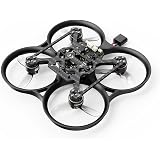
The successful execution of an **RC tricopter** flight test represents a significant milestone for any builder. It validates the design choices. Structural integrity and electronic systems are confirmed. This initial test flight is critical. Many variables contribute to flight performance. Understanding these elements is paramount.
A homemade **RC tricopter** involves complex engineering. Precision is required for assembly. Every component affects the craft’s dynamics. From frame material to flight controller software, each choice matters. Optimal performance is achieved through careful integration. This process demands a methodical approach.
Understanding Tricopter Aerodynamics and Design
Tricopters possess unique aerodynamic characteristics. These distinguish them from quadcopters. A tail motor provides yaw control. This motor can tilt left or right. This mechanism simplifies design. However, it introduces mechanical complexity. The single tail motor assembly must be robust.
Frame design is often a primary consideration. Carbon fiber frames are lightweight. They also offer high rigidity. G10 fiberglass is another common material. This material provides good durability. Frame stiffness minimizes vibration. Excessive vibration degrades flight controller performance. It can introduce measurement noise.
Critical Component Selection for Tricopter Builds
The power system is central to any **tricopter** build. Motors must be matched to propellers. Propeller pitch and diameter are crucial. High KV motors suit smaller, faster props. Lower KV motors are better for larger, more efficient props. Motor selection dictates overall thrust potential. It influences flight time.
Electronic Speed Controllers (ESCs) convert battery power. They control motor speed. ESC firmware like BLHeli_S is prevalent. It offers responsive motor control. ESC calibration is a vital step. Mismatched ESCs can lead to instability. It can also cause desync issues.
The flight controller acts as the craft’s brain. It processes sensor data. It stabilizes the aircraft. Popular firmware includes Betaflight and ArduPilot. These systems offer extensive tuning parameters. Gyroscopes and accelerometers are integrated. They provide essential attitude information.
Pre-Flight Checks and Initial Calibration Procedures
Thorough pre-flight checks are indispensable. All wiring connections must be secure. Loose connections can cause power interruptions. They are a common failure point. Motor direction should be verified. Propellers are mounted in the correct orientation. Incorrect rotation drastically affects lift.
Radio control system setup requires precision. Stick endpoints must be calibrated. This ensures full control authority. Failsafe settings are configured. These activate upon signal loss. A proper failsafe prevents flyaways. It protects the aircraft and surroundings.
Flight controller calibration is also necessary. Accelerometer calibration sets a level horizon. Magnetometer calibration corrects compass readings. This is critical for GPS-enabled flight modes. Sensor accuracy directly impacts flight stability. Any deviation must be addressed.
Tail Mechanism Design and Yaw Control
The yaw mechanism is fundamental to **tricopter** operation. It typically involves a servo. This servo tilts the tail motor. The angle of tilt generates yaw force. Servo selection is important. A high-speed, high-torque servo is often preferred. Digital servos offer greater precision.
Slop in the yaw mechanism is detrimental. It introduces unpredictable yaw responses. The mechanical linkage must be robust. It must be free from play. Any looseness compromises control. This can make the tricopter very difficult to fly. Precision engineering is key.
PID tuning for yaw is often unique. It differs from roll and pitch. The mechanical latency of the servo is considered. Proper tuning achieves crisp yaw response. Over-tuning can lead to oscillations. Under-tuning results in sloppy control. Iterative adjustments are usually required.
Optimizing Flight Performance and Stability
PID tuning is an iterative process. It involves adjusting proportional, integral, and derivative gains. P-gain affects responsiveness. I-gain corrects for persistent errors. D-gain dampens oscillations. Each axis requires individual tuning.
Vibration dampening is another critical aspect. Soft mounting the flight controller is common. Rubber grommets or foam pads are utilized. Excessive vibrations are filtered. These interfere with IMU readings. Clean sensor data is essential for stable flight.
Battery selection impacts flight duration. C-rating indicates discharge capability. Higher C-ratings support aggressive flying. Cell count determines voltage. A 4S (14.8V) LiPo battery is often used. It offers a good balance of power and weight. Battery health affects performance. Old batteries often sag under load.
Troubleshooting Common Tricopter Flight Issues
Instability often points to tuning issues. Incorrect PID values are a frequent cause. Motor desync can manifest as a sudden twitch. It points to ESC or motor problems. Propeller balance can also induce vibrations. Unbalanced props cause high-frequency oscillations. These are hard to filter.
Uncommanded yaw can indicate several problems. A faulty tail servo is one possibility. Imperfect yaw PID tuning is another. Magnetic interference on the magnetometer also contributes. Calibration must be re-checked. The environment should be considered.
Poor flight duration might be due to inefficiency. Over-propped motors draw too much current. Heavy battery weight reduces power-to-weight ratio. Suboptimal propeller choice leads to wasted energy. Analyzing flight logs helps diagnose these issues. Current draw and voltage sag provide insights.
The successful maiden flight of a homemade **RC tricopter** is a rewarding experience. It represents countless hours of planning and assembly. Continued tuning ensures optimal performance. The journey from parts to stable flight is challenging. However, it offers deep satisfaction to the enthusiast.
Debriefing the Tricopter Flight Test: Your Questions Answered
What is an RC tricopter?
An RC tricopter is a type of remote-controlled drone that uses three motors to achieve flight. It’s often a homemade project built by enthusiasts.
What makes a tricopter different from other drones like quadcopters?
Tricopters are unique because they use a single tail motor that can tilt left or right to control the drone’s yaw, which is how it turns horizontally.
Why is the first flight test important for a homemade tricopter?
The initial flight test is a significant step because it confirms that the design, structural integrity, and electronic systems of the homemade tricopter are working correctly.
What are some essential parts needed when building a tricopter?
Important components include motors and propellers for thrust, Electronic Speed Controllers (ESCs) to control motor speed, and a flight controller which acts as the drone’s central brain.
Why are pre-flight checks necessary before flying a tricopter?
Pre-flight checks are vital to ensure all wiring is secure, motors are spinning in the correct direction, and the radio control system is properly calibrated to ensure a safe flight.